
Hawassa University
A large public university in Hawassa whose College of Medicine and Health Sciences grew out of a health faculty at Dilla in the 1990s. It now runs 41 programmes for about 2,644 students and teaches at Hawassa University Comprehensive Specialized Hospital, a referral centre for southern Ethiopia.
Health programmes
- Doctor of Medicine (MD)
- BSc Anesthesia
- BSc Medical Radiology Technology
- BSc Optometry
- BSc Comprehensive Nursing
- BSc Psychiatry Nursing
- BSc Midwifery
- BSc Pharmacy
- BSc Medical Laboratory Science
- BSc Environmental Health
- BSc Health Informatics
- Specialties: internal medicine, general surgery, orthopaedics, obstetrics and gynaecology, paediatrics, ophthalmology, clinical radiology, anaesthesiology, emergency and critical care, oral and maxillofacial surgery, pathology
- Subspecialty: gynaecologic oncology
- MSc Medical Biochemistry, MSc Clinical Anesthesia
- MSc Clinical Midwifery, MSc Pediatric and Child Health Nursing, MSc Integrated Clinical and Community Mental Health
- MSc Pharmacology
- MSc Medical Microbiology, Medical Parasitology, Clinical Laboratory Science (diagnostic and public health microbiology)
- 7 regular MPH tracks (environmental health, field epidemiology, epidemiology, health service management, reproductive health, general public health, hospital and health care administration)
- PhD in Public Health
Health and medical education
Hawassa's College of Medicine and Health Sciences (CMHS) began outside Hawassa. Its origin is the Dilla Teachers Education and Health Science College, founded in 1989 in the Ethiopian calendar near Dilla, whose Faculty of Health Science trained nurses, laboratory technicians and environmental health workers. The college gives two start dates: its homepage says it was established in 1997 as the Faculty of Health under Dilla College, while the School of Nursing and the laboratory directorate both date themselves to 1996. The faculty moved to Hawassa in 2002/03 (1996 E.C.) to take over a hospital then under construction, became a college and started training doctors.
Today the college says it offers 12 undergraduate, 17 postgraduate, 10 specialty, 1 subspecialty and 1 PhD programme, for 2,644 students across 41 programmes. It employs more than 2,442 staff, including more than 470 academics.
Medicine
The School of Medicine dates from 2003, when the Dilla health college moved to Hawassa. The medicine directorate runs four first degrees: Medicine, Anesthesia, Optometry and Medical Radiology Technology, with about 900 undergraduates. It also runs 14 postgraduate programmes with about 256 students. Its residency list covers internal medicine, general surgery (started 2014; 12 new residents a year), orthopaedics, obstetrics and gynaecology, paediatrics, ophthalmology, clinical radiology, anaesthesiology, emergency and critical care, oral and maxillofacial surgery, and pathology (residency since 2015). There is also a gynaecologic oncology subspecialty. Two MSc programmes are listed: medical biochemistry and clinical anaesthesia. The directorate reports about 261 academic staff, including 12 associate professors and 143 assistant professors.
The college also hosts a cancer treatment centre for adults and children, a clinical skills laboratory and a continuing professional development directorate.
Nursing and midwifery
Since April 2024, a single Nursing and Midwifery Academic and Service Directorate has run both teaching and the hospital's nursing service, which has more than 450 nurses and midwives. The School of Nursing (founded 1996) offers comprehensive nursing and psychiatric nursing. Its master's programmes are in adult health, paediatrics and child health, and emergency and critical care nursing. The Midwifery Department (founded 1999 E.C., about 2006/07) runs a BSc in Midwifery and an MSc in Clinical Midwifery. The directorate also lists an MSc in integrated clinical and community mental health.
Pharmacy, laboratory and public health
- Pharmacy is its own directorate. Its page lists one undergraduate programme and a master's in pharmacology.
- Medical Laboratory dates to 1996 at Dilla and reports more than 1,600 graduates. It offers the BSc and MSc degrees in medical microbiology, medical parasitology and clinical laboratory science. Its hospital laboratory doubles as an antimicrobial-resistance surveillance site.
- Public Health was established in 2004 as the School of Public and Environmental Health. It runs three first degrees (two named on its page: environmental health and health informatics), seven regular MPH programmes, five weekend or extension master's programmes and a PhD in Public Health, with 585 active students.
Teaching hospital
Hawassa University Comprehensive Specialized Hospital opened in 1998 E.C. (about 2005/06). It was built for teaching and serves patients from the region and neighbouring areas. The college says it delivered 147,973 medical services in 2016 E.C. (2023/24). Its eye department says it serves a population of more than 20 million in southern Ethiopia. We found older, conflicting bed counts from third parties and leave them out.
Accreditation and rankings
None of Hawassa's programmes appeared on the Education and Training Authority's online accreditation register when we checked. The register is new and had only 13 entries nationwide. We could not check the World Directory of Medical Schools, which blocked automated access. EduRank puts Hawassa 5th in Ethiopia for obstetrics and gynaecology research, 7th for medicine, public health and pharmacology, and 8th for nursing.
The institution
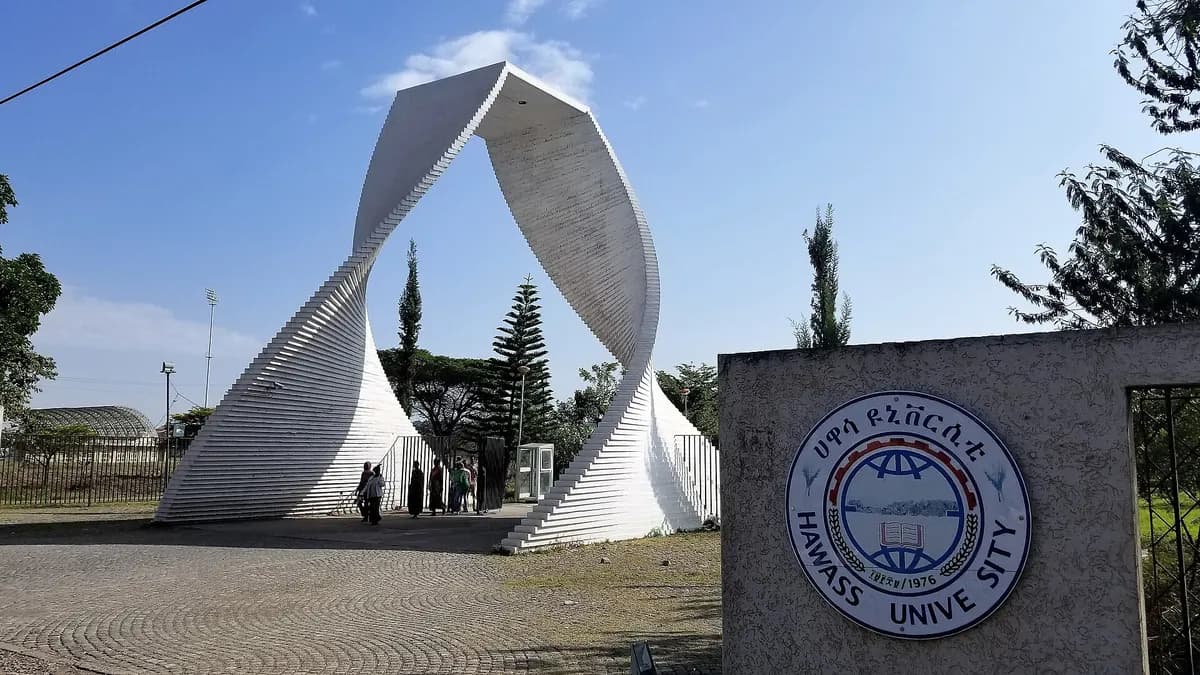
The university's own history starts in 1976, with the Awassa College of Agriculture, which admitted 217 students. According to Wikipedia, the government created Debub (South) University by merging that college with the Dilla college and the Wondo Genet forestry college. It was renamed Hawassa University in 2006 and re-established by regulation in 2011. It was one of the eight research universities in the Ministry's 2020 classification. EduRank ranks it 4th in Ethiopia overall; uniRank ranks it 6th.
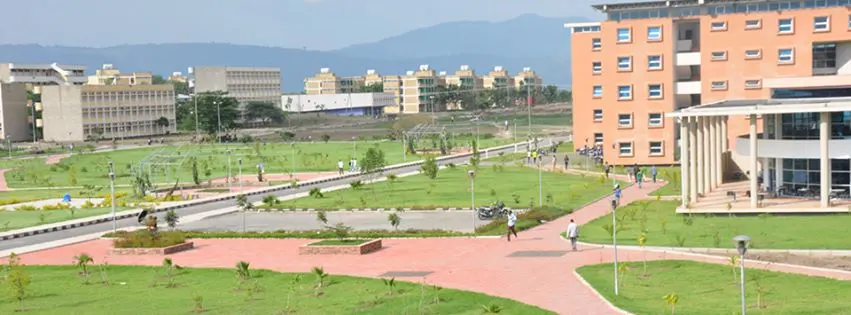
Hawassa is the capital of the Sidama Region, about 278 km south of Addis Ababa. The university has several campuses; the health college and hospital are on their own site in the city. Regular undergraduates are placed through the national system after the entrance exam. Weekend and extension master's programmes are open to working health professionals.
Before you apply
- The college's website still shows template placeholder text in places. Confirm programme lists and contacts by phone (+251 46 212 0095) before relying on them.
- Ask whether your master's programme runs as regular, weekend or extension study. Public health offers all three.
- Ask the registrar for the current ETA accreditation letter for your programme.
- If you want eye care, radiography or optometry, Hawassa is one of the few public universities listing optometry and medical radiology technology degrees. Check the current intake.
Rankings
These measure research output or web presence, not teaching. Tap a figure to open the ranking.
- EduRank Medicine (Ethiopia / Africa / world)7 / 67 / 1,697
- EduRank Obstetrics and Gynaecology (Ethiopia / Africa / world)5 / 55 / 976
- EduRank Nursing (Ethiopia / Africa / world)8 / 46 / 1,037
- EduRank Public Health (Ethiopia / Africa / world)7 / 37 / 831
- EduRank Pharmacology (Ethiopia / world)7 / 2,546
- EduRank overall (Ethiopia / Africa / world)4 / 117 / 3,782
- uniRank 2026 (Ethiopia)6
Compared in our guides
- The Top Pharmacy Schools in EthiopiaRate HU there
- The Top Public Health Schools in EthiopiaRate HU there
- Where to Study Midwifery in Ethiopia: The Schools, the Degrees and the Licensing ExamRate HU there
- The Top Nursing Schools in Ethiopia, ComparedRate HU there
- The Top Medical Schools in Ethiopia, Compared Across the RankingsRate HU there
Sources
- Hawassa University home page (contacts, history)
- College of Medicine and Health Sciences home page
- CMHS background
- CMHS: Medicine Academic and Service Directorate
- CMHS: Nursing and Midwifery Academic and Service Directorate
- CMHS: Pharmacy Academic and Service Directorate
- CMHS: Public Health Academic and Service Directorate
- CMHS: Medical Laboratory Academic and Service Directorate
- Hawassa University registrar contact (older site, via search result)
- EduRank: Hawassa University
- uniRank Ethiopia 2026
- Wikipedia: Hawassa University (Debub University 1999, renamed 2006)