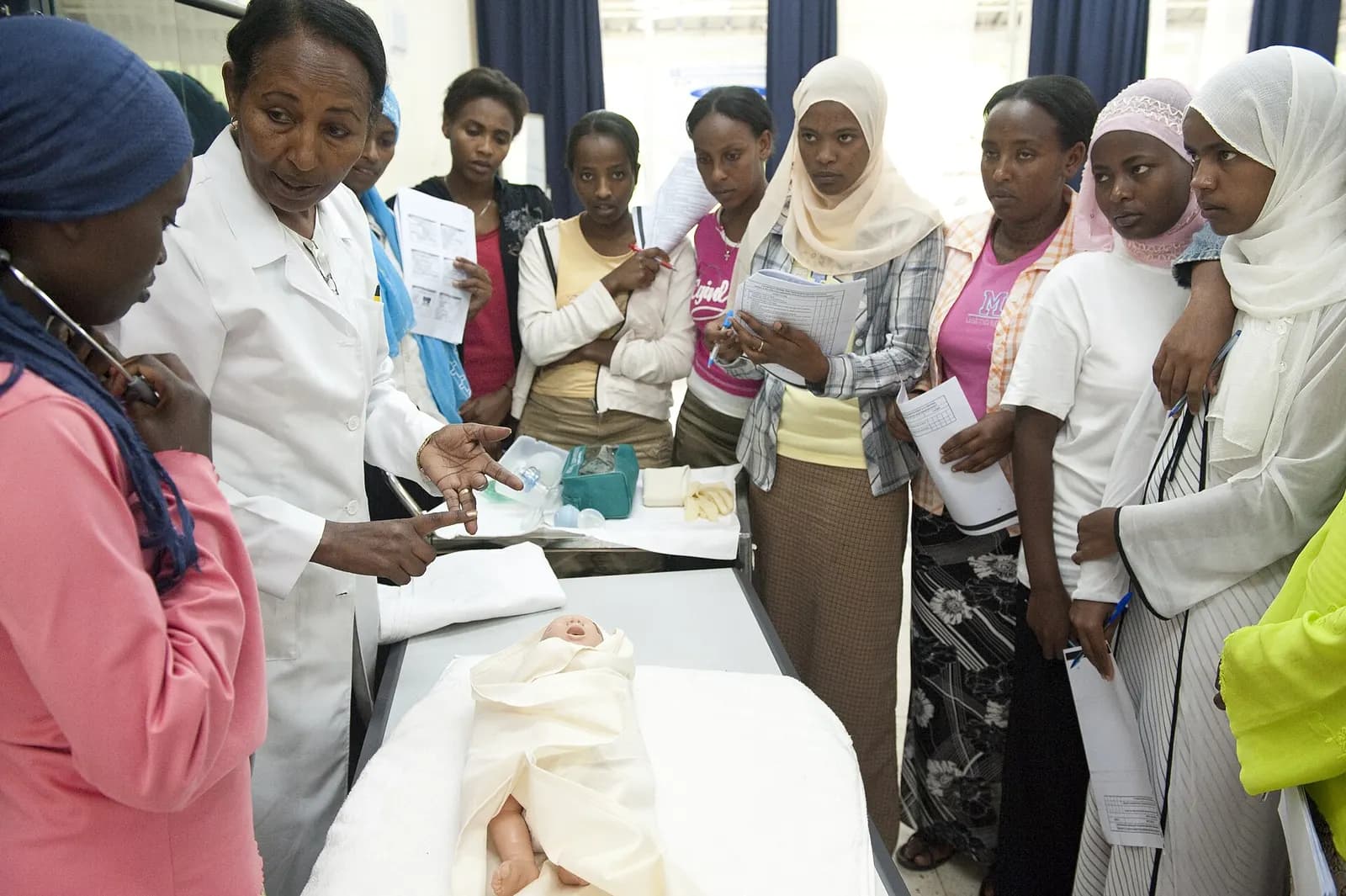
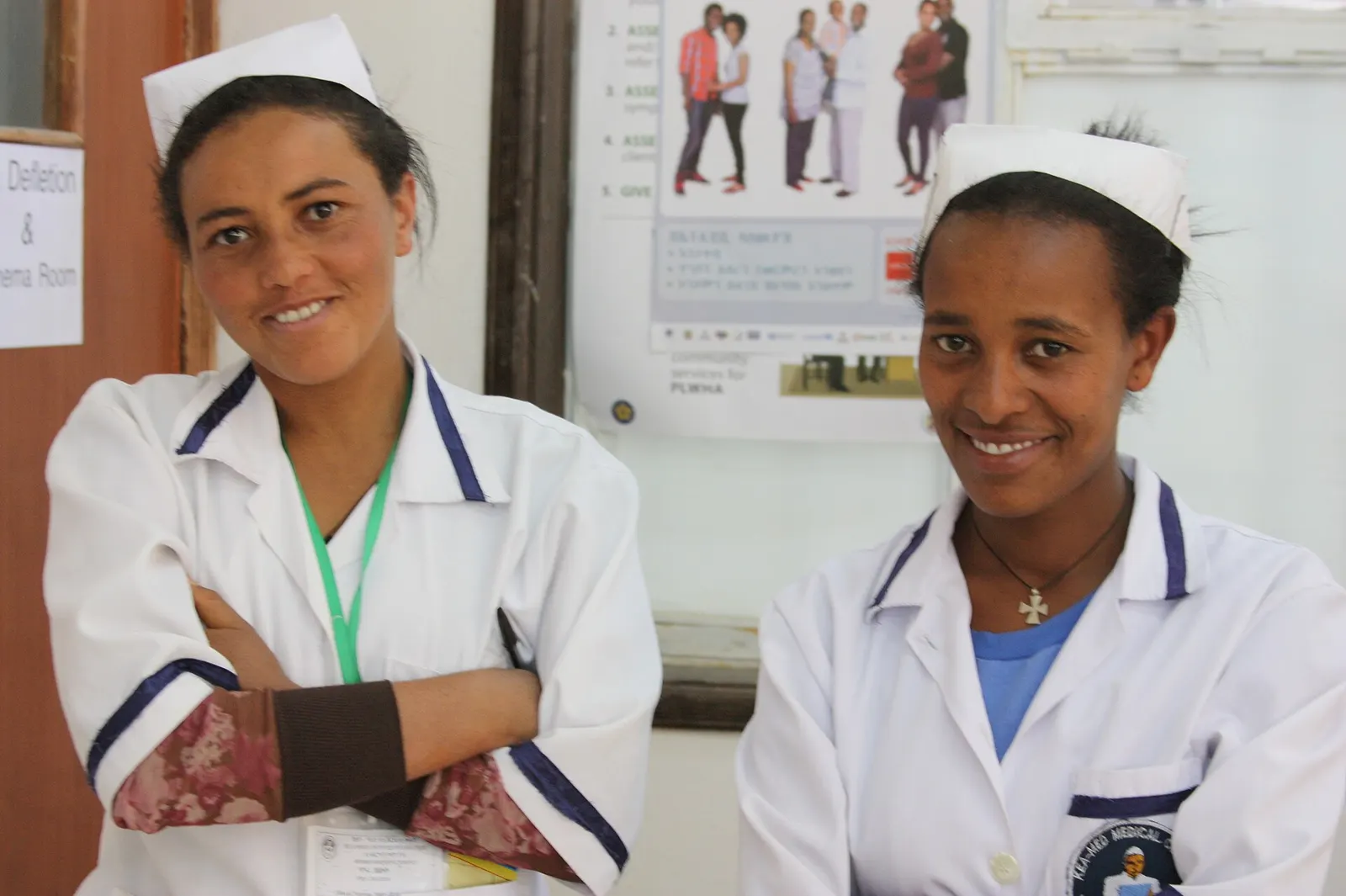
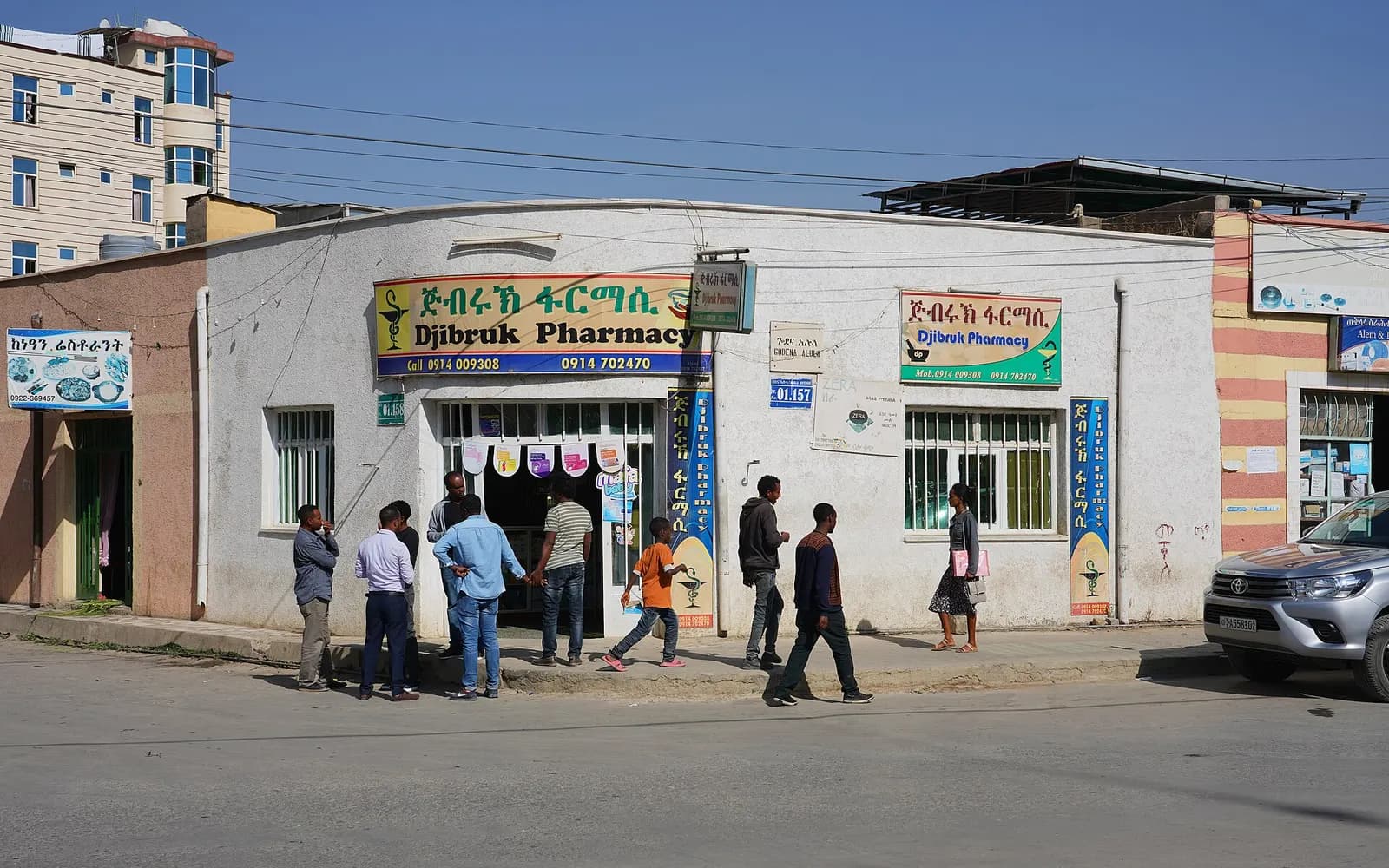
The Top Public Health Schools in Ethiopia
Ethiopia trained public health workers before it trained doctors. We compared the leading schools for MPH, PhD and health officer training, explained what the only public-health ranking measures, and covered what to check before you apply.
Ethiopia's first health college wasn't a medical school. In 1954 the government signed an agreement with the United States to set up a Public Health College in Gondar. The college would staff a national network of health centres, each with a health officer, a community nurse, a sanitarian and a laboratory technician, serving about 50,000 people. Doctor training at Gondar only began in 1978.
Seventy years on, EduRank finds public health research at 16 Ethiopian universities. The leading ones each list somewhere between seven and 17 master's tracks, from epidemiology and biostatistics to health economics and water and sanitation. Ethiopia also has the health officer, a bachelor's-level cadre that mixes clinical care with public health.
There are now dozens of public health programmes. This guide compares the leading schools on the one ranking that covers public health and on the programmes each school actually lists. It also covers what that ranking leaves out.
The short answer
On public health research, the University of Gondar and Addis Ababa University lead the country. Both are in Africa's top 10 on EduRank. Jimma University is a clear third.
Mekelle, Bahir Dar, Haramaya and Hawassa make up the second group. Bahir Dar now lists nearly as many master's tracks as Jimma.
What separates the schools is mostly specialisation. If you want health economics, field epidemiology or public health genomics, only some schools offer it.
How the schools compare
| School | EduRank Public Health 2026 (Ethiopia / Africa / world) | Public health unit | Master's tracks listed | PhD programmes listed |
|---|---|---|---|---|
| University of Gondar | 1 / 9 / 322 | Institute of Public Health | 17 | 9 |
| Addis Ababa University | 2 / 10 / 330 | School of Public Health | General MPH + 4 specialty tracks, plus field epidemiology | Yes (since 2003/04) |
| Jimma University | 3 / 12 / 447 | Faculty of Public Health | 13 | 5 |
| Mekelle University | 4 / 25 / 667 | College of Health Sciences | 8 | 1 |
| Bahir Dar University | 5 / 28 / 695 | College of Medicine and Health Sciences | 11 | 6 |
| Haramaya University | 6 / 32 / 745 | School of Public Health | 8 | none listed |
| Hawassa University | 7 / 37 / 831 | Public Health directorate | 7 (+5 weekend/extension) | 1 |
| Addis Continental Institute of Public Health (private) | not listed | Independent institute | MPH | — |
Programme counts come from each school's own published lists (Addis Ababa's from its school background page as archived in July 2024). Counts include MPH and MSc programmes in public-health fields. Schools publish these lists at different times and in different formats, so treat small differences as noise.
How to read this
- EduRank (Public Health) is the only ranking we found that ranks Ethiopian universities on public health specifically. It counts citations to public health research papers, adjusted for publication date. Across the 16 Ethiopian universities it lists, it counted about 29,700 papers and 834,000 citations. It says nothing about teaching, and it does not distinguish undergraduate from graduate programmes.
- Times Higher Education and QS do not publish a separate public health table. Their general and "medical and health" rankings are covered in our medical schools guide.
- "Master's tracks listed" shows the range of options, not quality. A school with 17 tracks gives you more choice, but it may have fewer staff per track.
Two ways into public health in Ethiopia
The health officer (BSc)
The health officer is Ethiopia's own cadre. According to a 2008 Global Health Workforce Alliance case study, health officers:
- provide clinical care at health centres;
- manage health centres and woreda (district) health offices;
- were to supervise the country's health extension workers under the expansion plan.
The cadre has stopped and restarted. Gondar's college was founded to train health officers in the 1950s. The same case study says the cadre "was stopped in the late 1990s". It was revived in 2005 with an accelerated training programme run through five universities and 20 hospitals. By mid-2008, more than 900 people had graduated and 3,168 were in training.
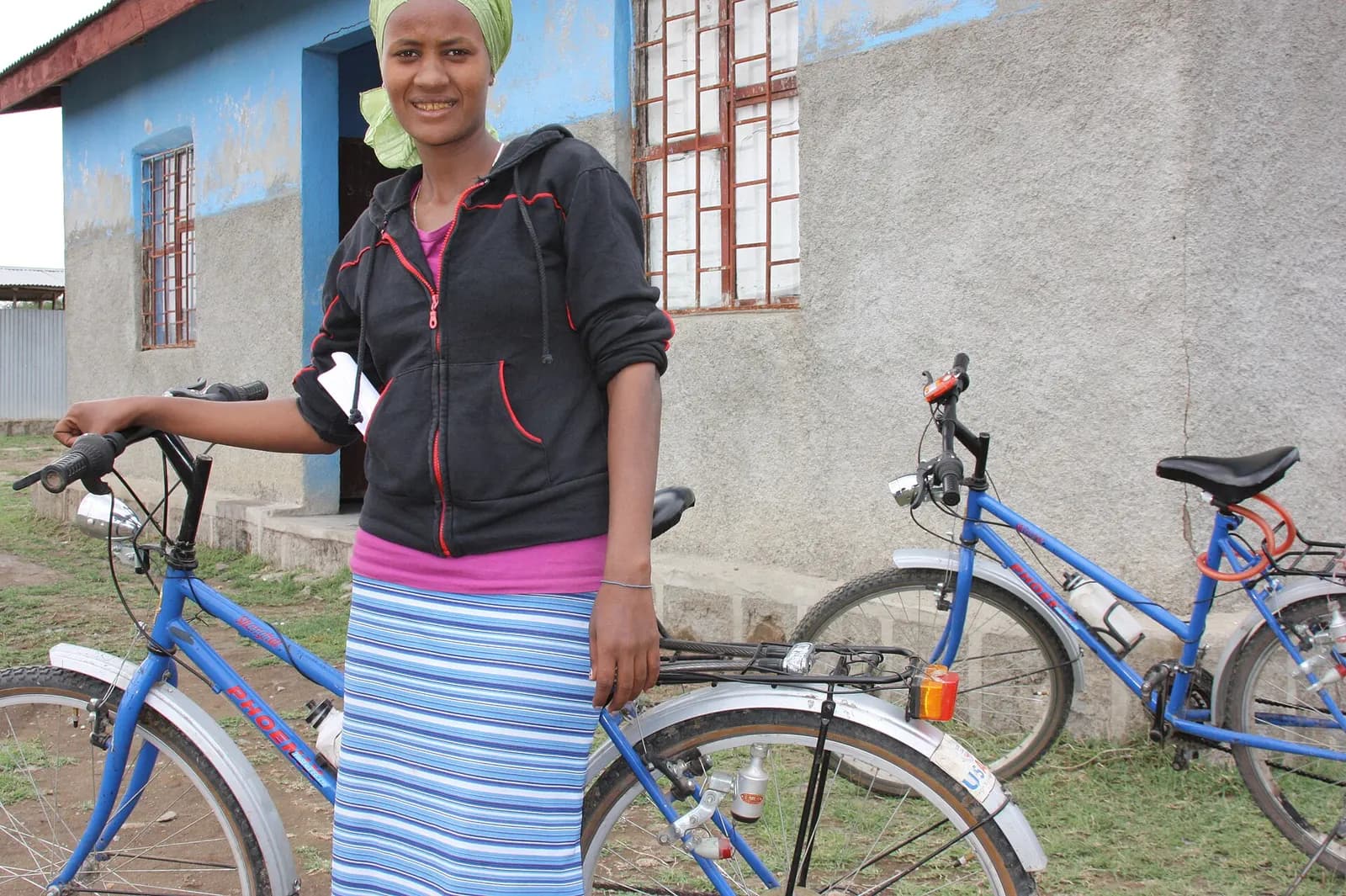
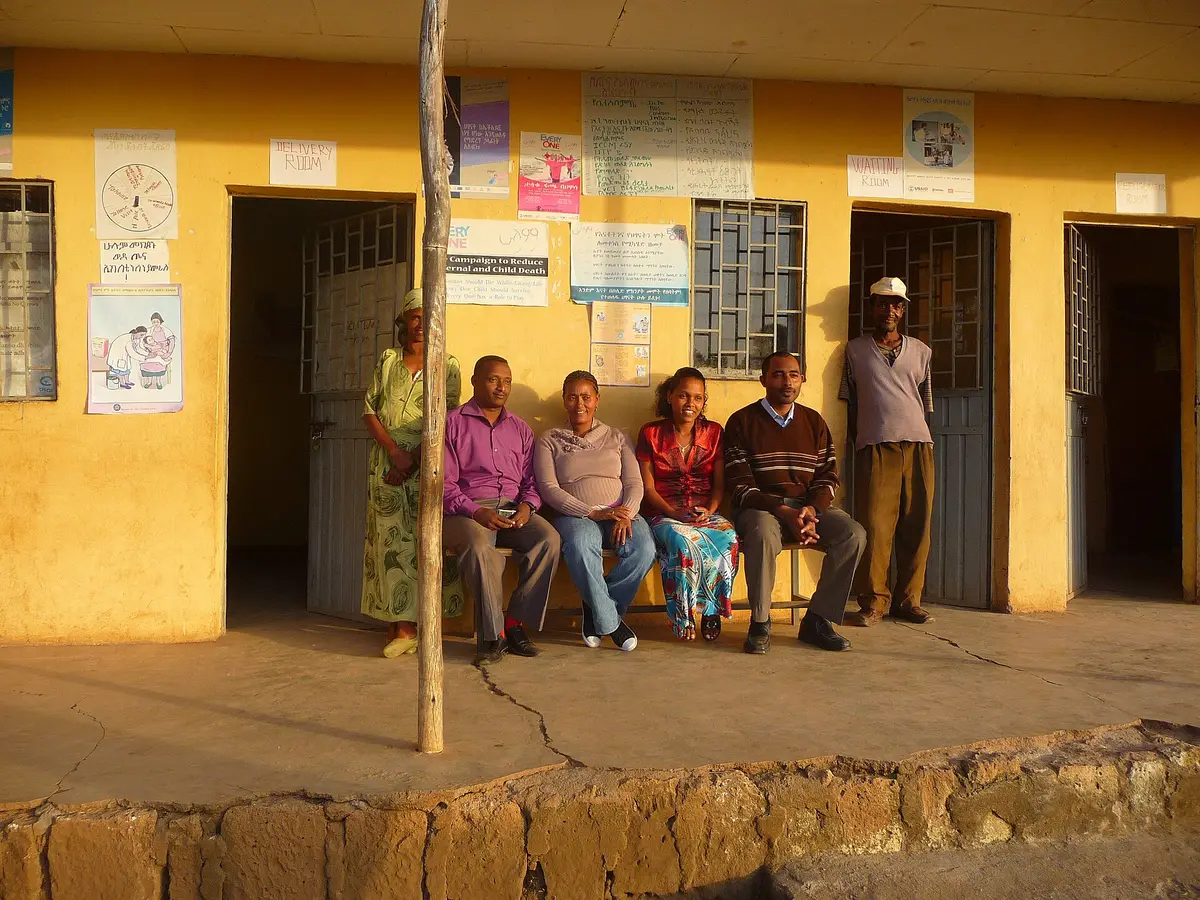 Photo: USAID Ethiopia (Kelly Ramundo), CC BY 2.0, via Wikimedia Commons. Health extension workers Wubalem Bezabih and Fetelwork Gezahegn (centre) at the Remeda Health Post, SNNP Region.
The health officer sits above the Health Extension Programme. Launched in 2003, it put two women health extension workers in each village health post after a year of training. Each health post serves a kebele of roughly 5,000 people, and more than 15,000 posts were built. The 2008 plan had health officers supervising this frontline and handling referrals, which is why the degree combines clinical medicine with public health.
You can see that mix in the licensing exam. In the Ministry of Health's 2024 blueprint for the Public Health licensing exam, 53% of questions are on patient care: internal medicine, surgery, paediatrics, obstetrics and more. Another 20% are on health promotion and disease prevention, 11% on leadership and management, 9% on research, and 7% on professionalism.
The MPH, MSc and PhD
Most people who call themselves epidemiologists, biostatisticians or health economists in Ethiopia trained at master's level. Addis Ababa University started Ethiopia's first MPH in 1984. Today, nearly every large public university offers a general MPH plus specialty tracks:
- epidemiology and biostatistics;
- reproductive health;
- nutrition;
- environmental and occupational health;
- health service management and health economics;
- monitoring and evaluation;
- health informatics.
Field epidemiology
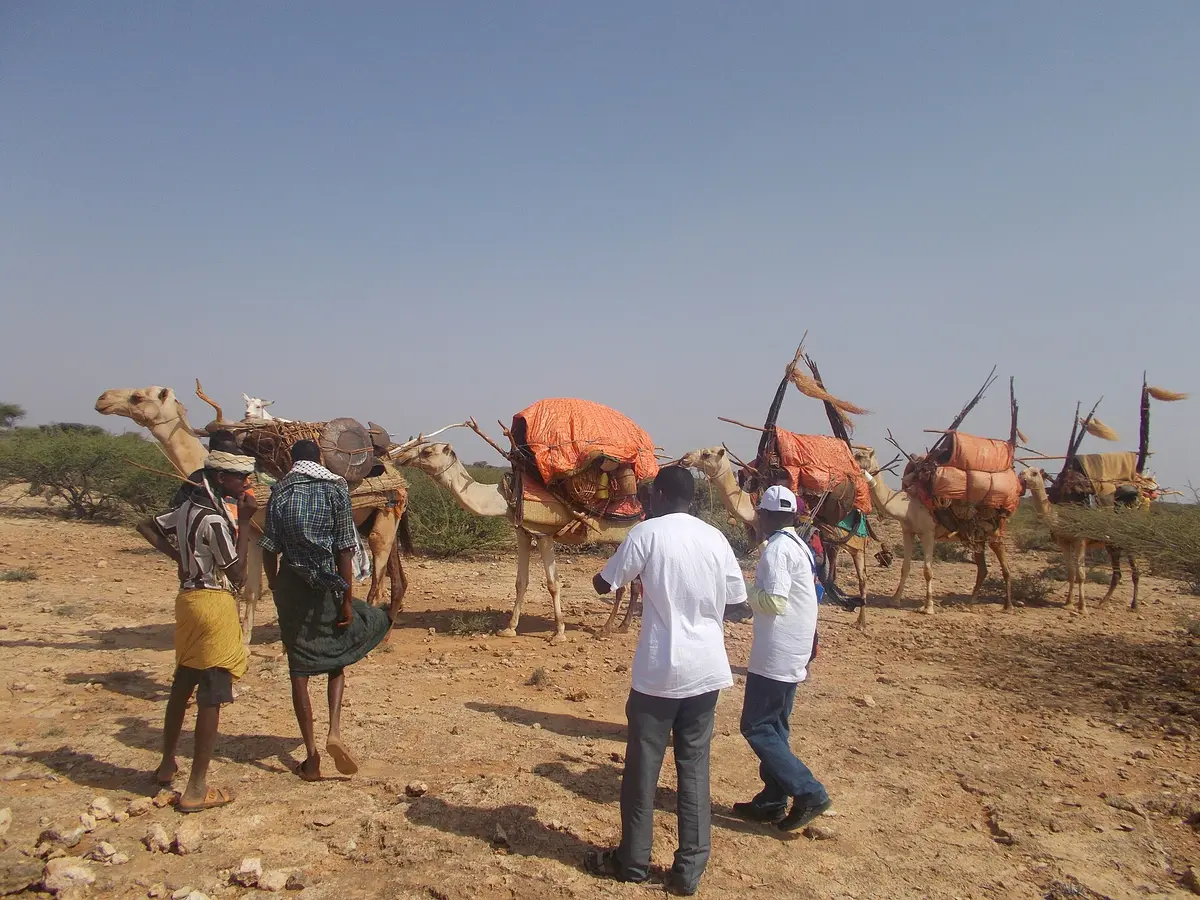 Photo: CDC Global, CC BY 2.0, via Wikimedia Commons
The Ethiopia Field Epidemiology and Laboratory Training Program (EFELTP) is a separate, applied route. AAU describes it as a competency-based programme to improve public health surveillance and epidemic control. Several universities list it as an MPH in Field Epidemiology.
According to the Ministry of Health:
- the programme started in 2009 with one university;
- it now runs through eight universities and 45 field bases;
- it has produced more than 700 advanced-level graduates;
- in 2022, TEPHINET's Global Accrediting Body accredited the advanced-level programme.
It is run with the Ethiopian Public Health Institute (EPHI). EPHI's roots go back to an early-1950s agreement with the Institut Pasteur of Paris (1944 in the Ethiopian calendar), and it runs national disease surveillance and the national reference laboratory. Addis Ababa, Gondar, Mekelle, Haramaya and Hawassa all list field epidemiology among their master's programmes.
The schools, one by one
 1. University of Gondar, Institute of Public Health
Profile, contacts and photos →
Gondar is where public health training in Ethiopia began. Its institute describes the 1954 college as having "laid the foundation for a team approach and community-based teaching of health professionals in Ethiopia". The Department of Community Health became a School of Public Health in 2000 and the Institute of Public Health in 2010.
Today it has eight departments, one of them a dedicated Health Officer department. It also runs the Dabat Research Center and the long-running Team Training Program. It lists 17 master's programmes, the widest range of any school we checked, including MPH tracks in:
- health economics;
- biostatistics;
- field epidemiology;
- human resources for health management;
- occupational health and safety management.
It also lists nine PhD programmes, including epidemiology, biostatistics, and public health with concentrations in health economics or health systems and policy. Gondar is #1 in Ethiopia and #9 in Africa for public health research on EduRank.
 2. Addis Ababa University, School of Public Health
Profile, contacts and photos →
AAU's Department of Community Health was founded in 1964. It started Ethiopia's first MPH in 1984 and a PhD programme in 2003/04, and became the School of Public Health in February 2010.
Its programmes include:
- a general MPH plus specialty tracks in epidemiology, health management, environmental health and reproductive health;
- a health informatics programme run jointly with the Faculty of Informatics;
- an MPH sandwich programme for partners such as the Ministry of Health;
- the field epidemiology programme (EFELTP), run with the Ministry of Health.
It also teaches public health to AAU's medical students, including a five-week rural community health placement at Ziway, about 160 km south of Addis Ababa. With the Ethiopian Public Health Association, it runs the Ethiopian Journal of Health Development, a peer-reviewed public health journal. EduRank places it second in Ethiopia and tenth in Africa, just behind Gondar.
 3. Jimma University, Faculty of Public Health
Profile, contacts and photos →
Jimma's health college dates from 1983, when the Jimma Institute of Health Sciences grew out of a 1967 health assistant training school at Jimma Hospital. It was built around community-based education and is widely described as a pioneer in public health training.
Its Faculty of Public Health runs one BSc, 13 MPH/MSc and 5 PhD programmes across six departments:
- environmental health science and technology;
- epidemiology;
- health behaviour and society;
- health policy and management;
- human nutrition and dietetics;
- population and family health.
Health officer training at Jimma is coordinated together with medicine through a joint Medicine and Health Officer office. Jimma is third in Ethiopia on EduRank.
 4. Mekelle University, College of Health Sciences
Profile, contacts and photos →
Mekelle's College of Health Sciences lists eight public-health master's programmes: general public health, biostatistics, biostatistics and health informatics, reproductive health, hospital and health care administration, field epidemiology, monitoring and evaluation, and public health nutrition. It also offers a PhD in Public Health.
The college also runs the Kilite Awlaelo Health and Demographic Surveillance System as a research project. Mekelle ranks fourth in Ethiopia for public health research on EduRank.
 5. Bahir Dar University, College of Medicine and Health Sciences
Profile, contacts and photos →
Bahir Dar now lists 11 MPH tracks, and some of them are hard to find elsewhere: public health genomics, health promotion, health system and project management, and water, sanitation and hygiene. It also lists epidemiology, biostatistics, health informatics, environmental health, nutrition, reproductive health and a general MPH.
At doctoral level it lists six PhDs: public health, public health nutrition, environmental health, reproductive health, epidemiology and biostatistics. It is fifth on EduRank.
 6. Haramaya University, School of Public Health
Profile, contacts and photos →
Haramaya's School of Public Health lists eight regular MPH programmes, including clinical epidemiology, field epidemiology, health promotion and behaviour, health service management, public health nutrition and reproductive health.
Its research advantage is the Kersa Health and Demographic Surveillance System, which the university set up in 2007 in Kersa district, eastern Hararghe. By its 2015 profile it was following about 63,000 people and had supported several MSc and PhD studies. Haramaya is sixth on EduRank.
 7. Hawassa University, Public Health
Profile, contacts and photos →
Hawassa's public health unit was established in 2004, originally as the School of Public and Environmental Health. It runs:
- three undergraduate programmes: public health, environmental health and health informatics;
- seven regular MPH programmes: environmental health, field epidemiology, epidemiology, health service management, reproductive health, general public health, and hospital and health care administration;
- five weekend or extension master's programmes;
- a PhD in Public Health.
It reports 585 active students. Hawassa is seventh on EduRank.
 Not on the list: Addis Continental Institute of Public Health
Profile, contacts and photos →
ACIPH is a long-established private option for an MPH. It is an independent institute in Addis Ababa, set up in 2006. Its website describes it as a higher learning institute with formal accreditation from the Ministry of Education offering "accredited Master of Public Health training", and links to an ETA licence. The University of Gondar's Institute of Public Health lists it as a partner.
ACIPH doesn't appear on EduRank, which ranks universities, so its absence tells you nothing about its quality. Before enrolling at any private college, check its current licence with the Education and Training Authority yourself (see below).
Also worth knowing
- Arba Minch, Debre Markos and Wollega are the next three on EduRank's public health list (8th to 10th), ahead of Mizan Tepi, Debre Berhan, Madda Walabu, Aksum, Adama Science and Technology University and Rift Valley University.
- The Ethiopian Public Health Association holds an annual conference (its 37th is listed on its site) and, with AAU, runs the Ethiopian Journal of Health Development.
What no ranking measures
The licensing exam
The Ethiopian Health Professionals Licensing Examination started in 2019 for graduates of seven health professions. Passing it is now a requirement for a professional licence, and the ministry's exam page lists 17 professions, including Public Health, Environmental Health and Human Nutrition. The pass mark is set for each exam by an expert panel using the modified Angoff method.
We could not find pass rates published by profession or by school. That leaves the most useful number for comparing undergraduate public health programmes out of public view.
Who is allowed to teach
Accreditation matters, especially for private colleges and part-time study:
- In 2018, The Reporter described a HERQA circular, issued about five years earlier on the Ministry of Health's instruction, that banned extension programmes in public health, health officer, nursing, pharmacy, midwifery and dental medicine training. The same article said HERQA had recently suspended nine institutions, four of them in health education.
- In March 2026, the Education and Training Authority revoked the licences of 52 private colleges for failing to meet regulatory standards. The published report named only six, none of them health colleges, and no full list was released.
If you are choosing a programme
- Decide which route you need. A BSc in public health (health officer) is a clinical-plus-management degree that leads to work in health centres. An MPH or MSc is a specialist degree for research, programme or policy work.
- Pick the specialisation first, then the school. Health economics, field epidemiology, public health genomics and WASH are each offered by only a few schools. Check the current programme list on the school's own site.
- Ask about the field site. Gondar (Dabat), Haramaya (Kersa) and Mekelle (Kilite Awlaelo) run surveillance sites where students can do real data collection for their theses.
- For an undergraduate programme, ask for licensing-exam pass rates. Ask for the last two or three graduating classes. A good programme will know them.
- For a private college or any weekend or extension programme, verify the licence. Check with the Education and Training Authority that both the institution and that specific programme are currently licensed.
- Consider field epidemiology if you want outbreak work. EFELTP focuses on surveillance and epidemic control, and its advanced programme is internationally accredited.
After graduation
Public health graduates enter the same tight labour market as other health workers. Ethiopia's health labour market analysis assumes about 20% unemployment among new graduates, because funding for public-sector posts hasn't kept pace with training. Before you commit to a programme, ask the school where its recent graduates are working.
Sources
Rankings
- EduRank. 16 Best Public Health schools in Ethiopia, updated 15 March 2026.
Health officers and the Health Extension Programme
- Global Health Workforce Alliance, Task Force on Scaling Up Education and Training for Health Workers. Country case study: Ethiopia's human resources for health programme, 2008.
- Croke K. The origins of Ethiopia's primary health care expansion: The politics of state building and health system strengthening. Health Policy and Planning 35(10):1318–1327, 2020.
- Wikipedia. University of Gondar, for the 1954 agreement and the health-centre team model.
Field epidemiology and national institutions
- Ministry of Health. Ethiopia Field Epidemiology and Laboratory Training Program (EFELTP) has been accredited by TEPHINET's Global Accrediting Body (GAB).
- Ethiopian Public Health Institute. History of EPHI.
- Ethiopian Journal of Health Development. About the journal.
- Ethiopian Public Health Association. 37th Annual Conference.
Licensing and regulation
- Ministry of Health. Ethiopian Health Professionals Licensing Examination (EHPLE).
- Ministry of Health. EHPLE Information Booklet 2024: Public Health.
- The Reporter. HERQA issues certificates, defies its own directive, 6 January 2018.
- The Reporter. Education Authority Revokes Licenses of 52 Private Colleges, 31 March 2026.
School profiles
- Gondar: About the Institute of Public Health, MSc/MPH programmes and PhD programmes.
- Addis Ababa: School of Public Health background (archived July 2024); Amde WK, Sanders D, Lehmann U. Building capacity to develop an African teaching platform on health workforce development, Human Resources for Health 12:31, 2014 (Table 1).
- Jimma: Faculty of Public Health; Medicine and Health Officer Coordinating Office; Jimma University.
- Mekelle: College of Health Sciences 2nd degree programs.
- Bahir Dar: Post-graduate programs of Bahir Dar University (Registrar, 2017 E.C. second-semester admission list).
- Haramaya: Regular programs; Assefa N, et al. HDSS Profile: The Kersa Health and Demographic Surveillance System, International Journal of Epidemiology, 2015.
- Hawassa: Public Health, College of Medicine and Health Sciences.
- Addis Continental Institute of Public Health: official website.
See Bloom in your clinic
Fewer no-shows, less paper, cleaner billing — in one calm system your team will actually use. Book a short demo and we'll show you how.