The Top Medical Schools in Ethiopia, Compared Across the Rankings
Ethiopia went from five medical schools in 2005 to more than forty. We lined up how they place on EduRank, uniRank, Times Higher Education and QS — and looked at the one measure of a medical school that none of those lists can show you.
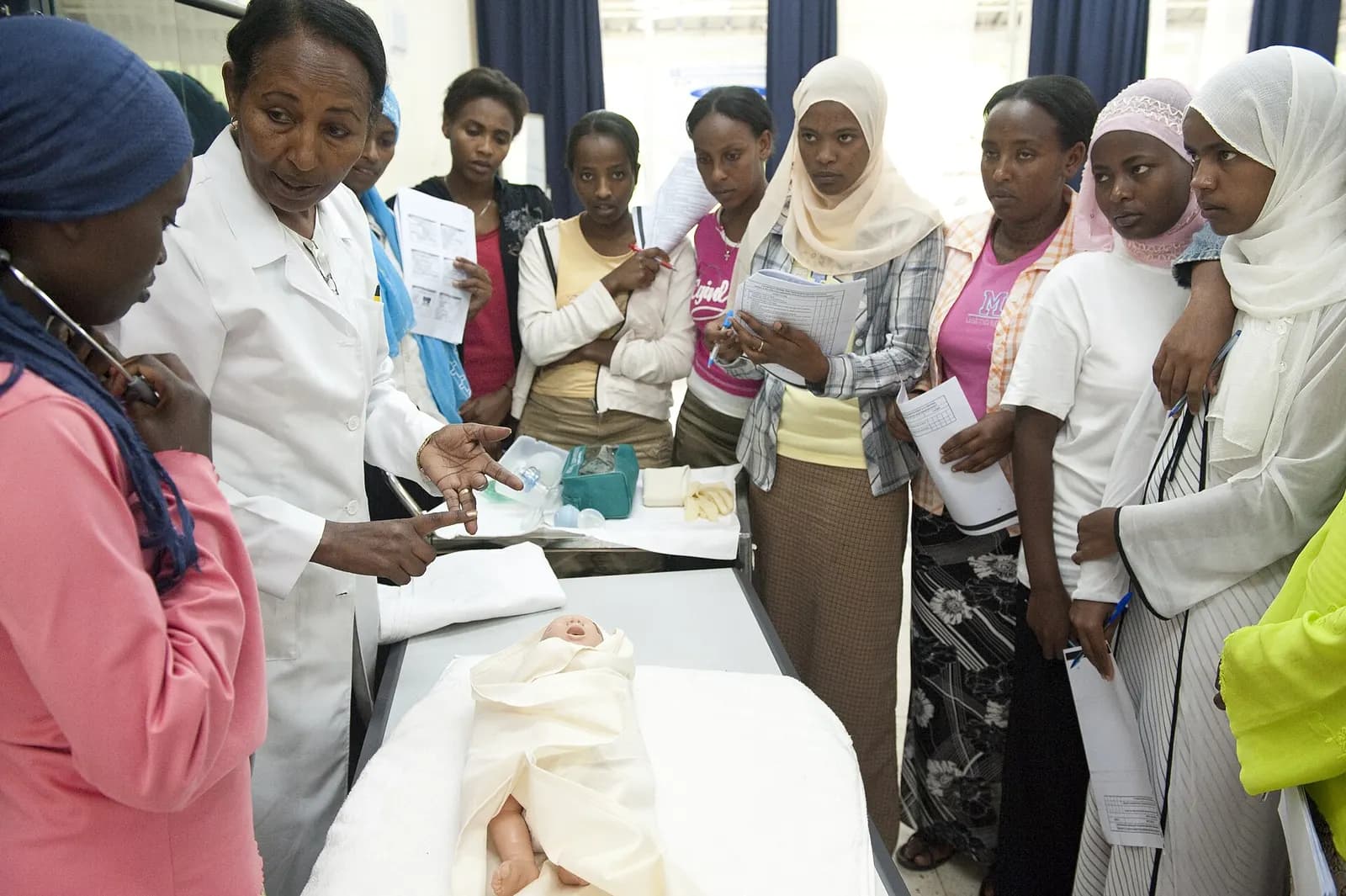
In 2005 Ethiopia had five medical schools. By 2022 it had 43 — 33 public and 10 private — after the government's "flood and retain" strategy told existing schools to multiply their intake and opened new ones across the regions. Roughly 2,000 to 2,500 doctors now graduate each year, and the country's physician density has climbed from about 0.25 per 10,000 people in 2009 to about 1.4 per 10,000 in 2023.
That growth makes the obvious question harder to answer. With forty-odd schools, which ones are actually the strongest? Ranking websites will each give you a list, but they measure very different things — research citations, web traffic, reputation surveys — and they don't all list the same schools.
So we put the main public rankings side by side, added what the schools themselves and the research literature say about each one, and looked at the one measure that matters most and is hardest to find.
The short answer
Addis Ababa University, the University of Gondar and Jimma University come out first, second and third on every list that ranks Ethiopian universities on medicine. Behind them, Mekelle, Bahir Dar, Haramaya and Hawassa form a clear second group, though their order changes depending on the list.
The most notable gap is St. Paul's Hospital Millennium Medical College. It is one of the country's largest teaching hospitals and introduced an innovative curriculum, yet it appears on none of the rankings. The reason, explained below, says a lot about what these lists actually measure.
How the schools compare across ranking sites
| School | EduRank Medicine 2026 (Ethiopia / world) | uniRank 2026 (Ethiopia) | Times Higher Education (latest listing) | QS Sub-Saharan Africa 2026 | Research university (2020) |
|---|---|---|---|---|---|
| Addis Ababa University | 1 / 751 | 1 | 601–800 (2023) | 13th | Yes |
| University of Gondar | 2 / 872 | 2 | — | — | Yes |
| Jimma University | 3 / 1,105 | 3 | 1201–1500 (2025) | — | Yes |
| Mekelle University | 4 / 1,491 | 5 | 1201–1400 (2027) | — | Yes |
| Bahir Dar University | 5 / 1,553 | 4 | — | — | Yes |
| Haramaya University | 6 / 1,653 | 7 | — | — | Yes |
| Hawassa University | 7 / 1,697 | 6 | — | — | Yes |
| Debre Markos University | 8 / 2,240 | 19 | — | — | No |
| Arba Minch University | 9 / 2,404 | 10 | — | — | Yes |
| St. Paul's (SPHMMC) | not listed | not listed | not listed | not listed | — |
A dash means the school does not appear in that ranking. For QS, the dash means the school is not in the published top 15; Addis Ababa is the only Ethiopian university there. "Research university" is the Ministry of Science and Higher Education's 2020 classification.
What each list is actually measuring
- EduRank (Medicine) counts citations to medical research papers. It is the only list here that looks specifically at medicine, but it measures research output, not teaching.
- uniRank is based on web popularity metrics. It is useful for seeing which universities are most visible online and tells you nothing about quality.
- Times Higher Education only ranks universities that submit data to it. A missing school may simply not have submitted. Addis Ababa University's last appearance was the 2023 edition; in the 2027 edition, Mekelle is the only Ethiopian university listed.
- QS relies heavily on academic and employer reputation surveys. In its 2026 Sub-Saharan Africa ranking, Addis Ababa placed 13th on the strength of its reputation scores.
- The research-university designation is a government category, not a score. In 2020 the ministry sorted Ethiopia's public universities into research, applied, comprehensive and specialised groups, and named eight as research universities.
All of these lists rank research output or reputation. None measures how well a school trains doctors.
The schools, one by one
 1. Addis Ababa University, College of Health Sciences
Profile, contacts and photos →
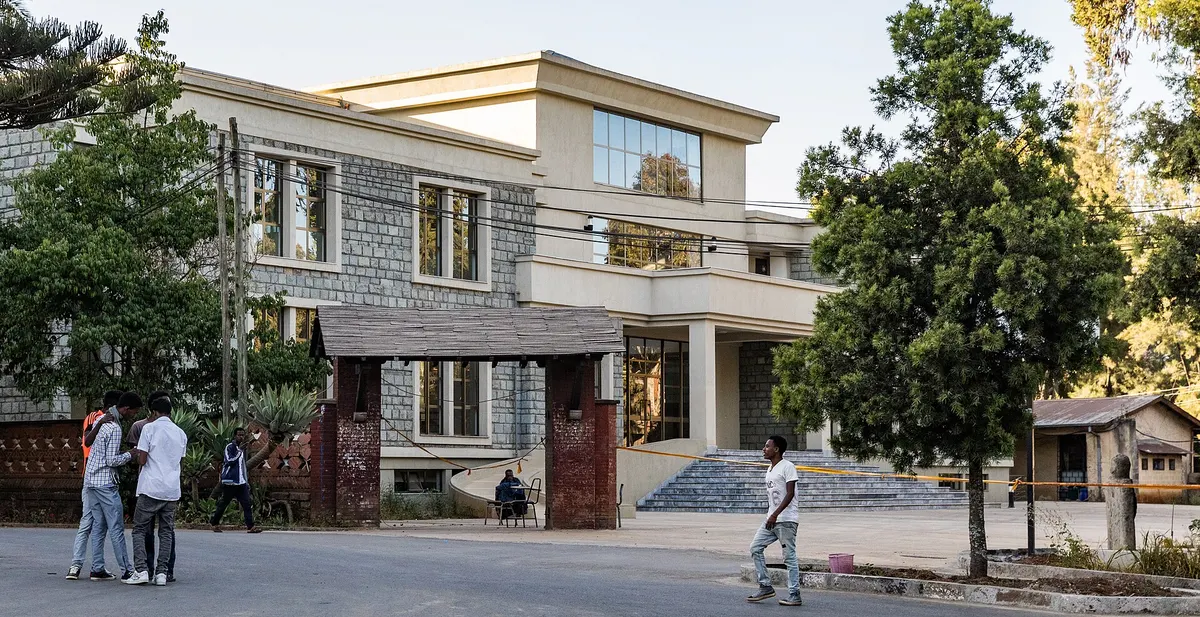 Photo: Ninaras, CC BY 4.0, via Wikimedia Commons
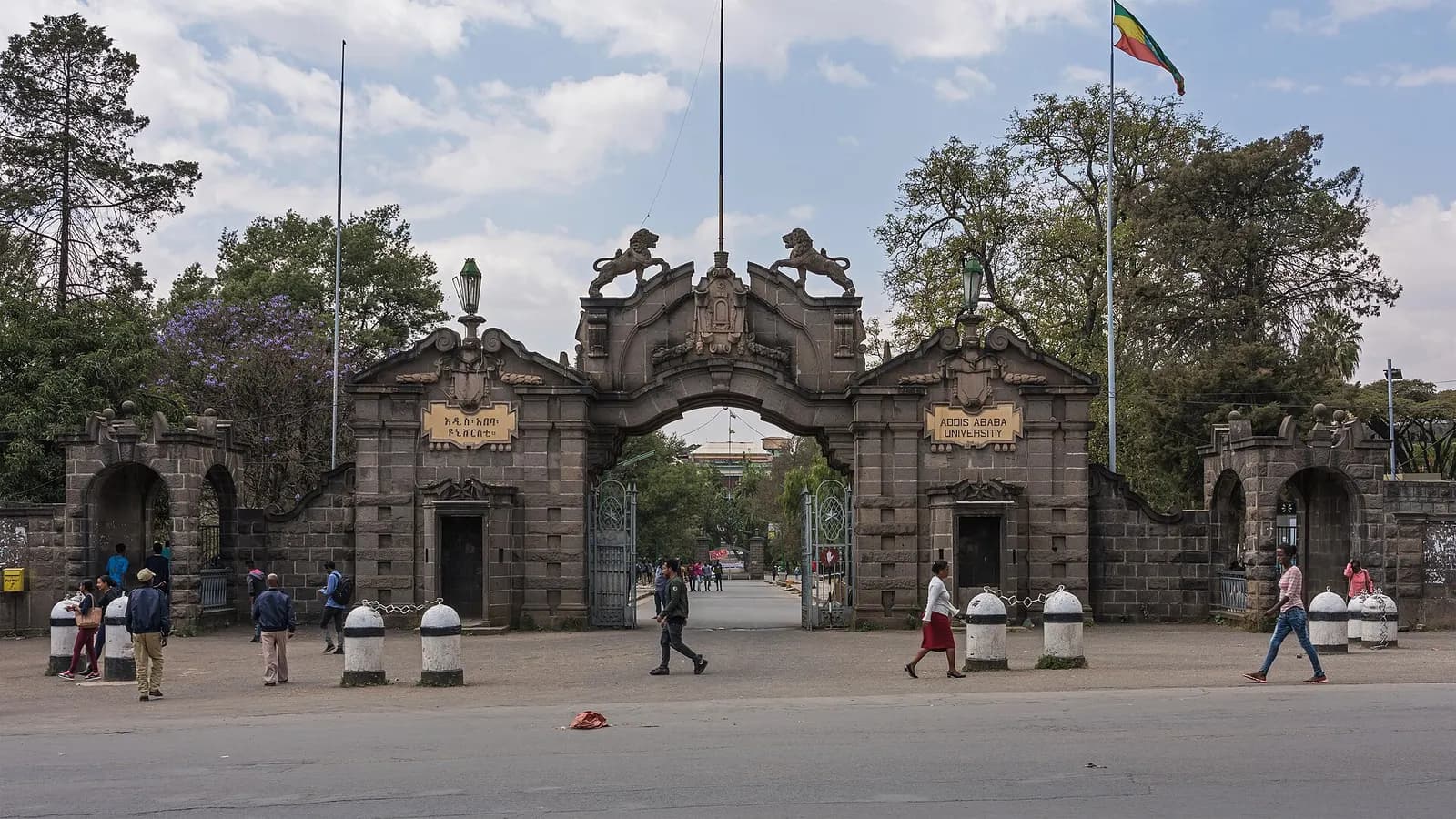
The country's first medical school, established in 1964, trains at Tikur Anbessa (Black Lion) Specialized Hospital. With about 700 beds, it is the largest specialised hospital in Ethiopia and the end of the referral chain for much of the country.
Much of Ethiopia's specialist training started here. East Africa's first neurology residency began at Tikur Anbessa and Zewditu hospitals in 2006. Ethiopia's first family-medicine residents (seven doctors) graduated in 2016.
Addis Ababa leads every list that ranks medicine: #1 in Ethiopia and #15 in Africa on EduRank, and 13th in QS's Sub-Saharan Africa table.
 2. University of Gondar, College of Medicine and Health Sciences
Profile, contacts and photos →
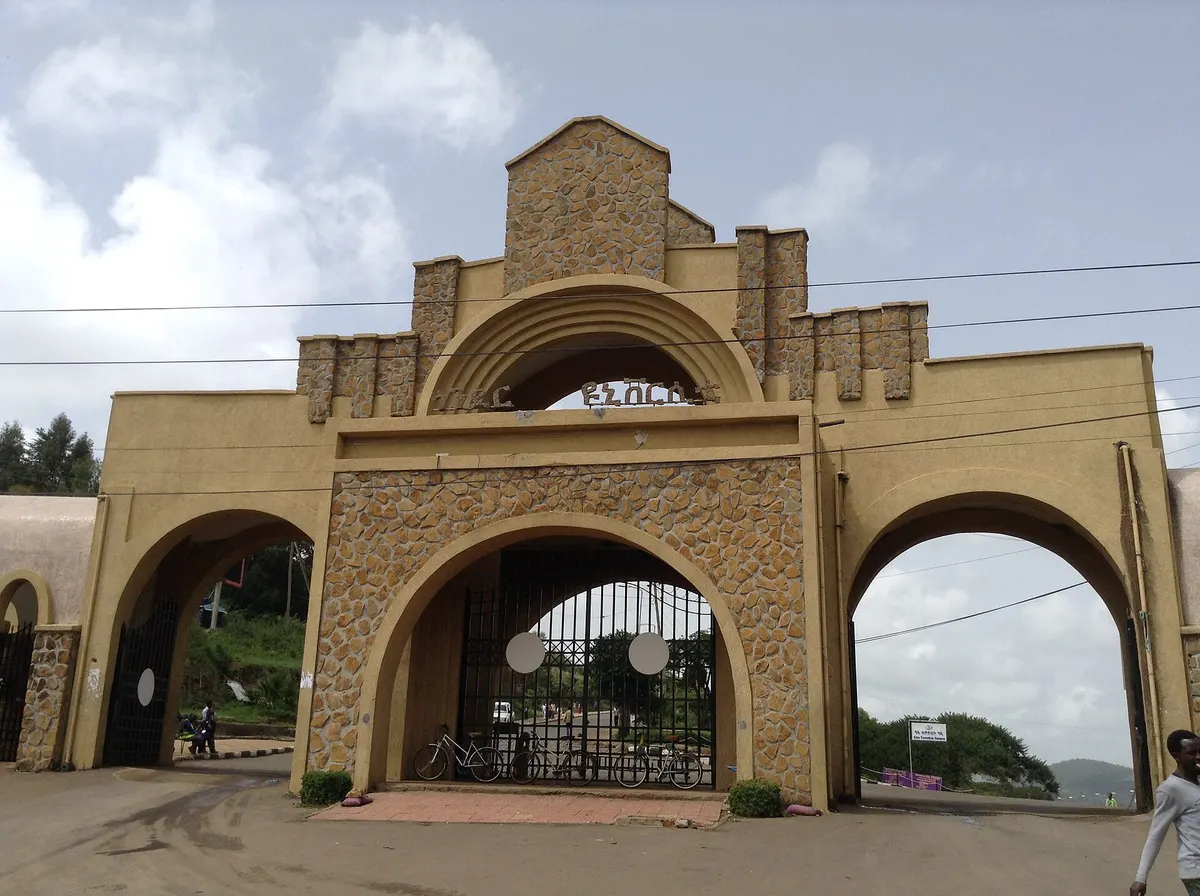 Photo: Javaman200, CC BY-SA 4.0, via Wikimedia Commons
Gondar has the oldest roots in health training in Ethiopia. It opened in 1954 as the Public Health College and Training Centre, using a team-based, community-based model to train health workers for rural areas. Doctor training began in 1978, with early teaching by German physicians under an agreement with Karl Marx University. The college became the University of Gondar in 2004.
It is second in Ethiopia on both EduRank (#20 in Africa) and uniRank.
 3. Jimma University, Institute of Health
Profile, contacts and photos →
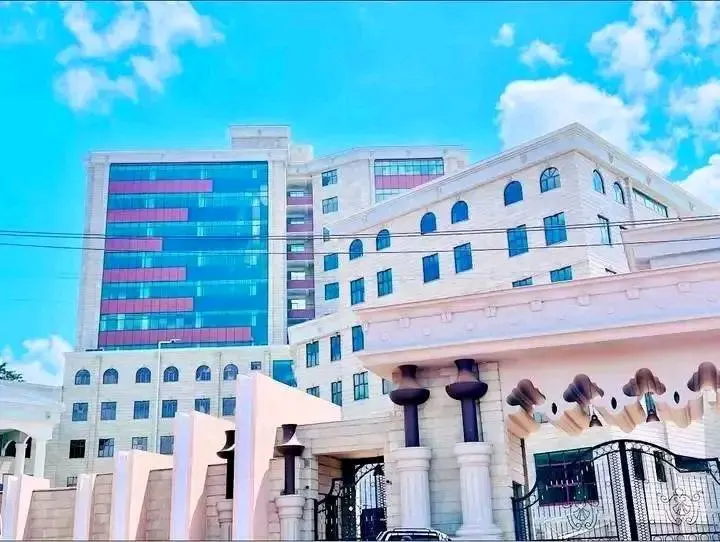 Photo: Nesru Temam, CC BY-SA 4.0, via Wikimedia Commons
Jimma was founded in 1983 as the Jimma Institute of Health Sciences. It was built around community-based education, and every undergraduate programme still includes a community-based training component. Its teaching hospital, Jimma University Medical Center, had 523 beds and a catchment population of over 15 million in 2012.
Jimma has the best Times Higher Education record of any Ethiopian school on these lists:
- World University Rankings 2025: 1201–1500.
- Medical and Health subject table: 601–800.
- Impact Rankings (Good Health and Wellbeing): 101–200.
 4. Mekelle University, College of Health Sciences
Profile, contacts and photos →
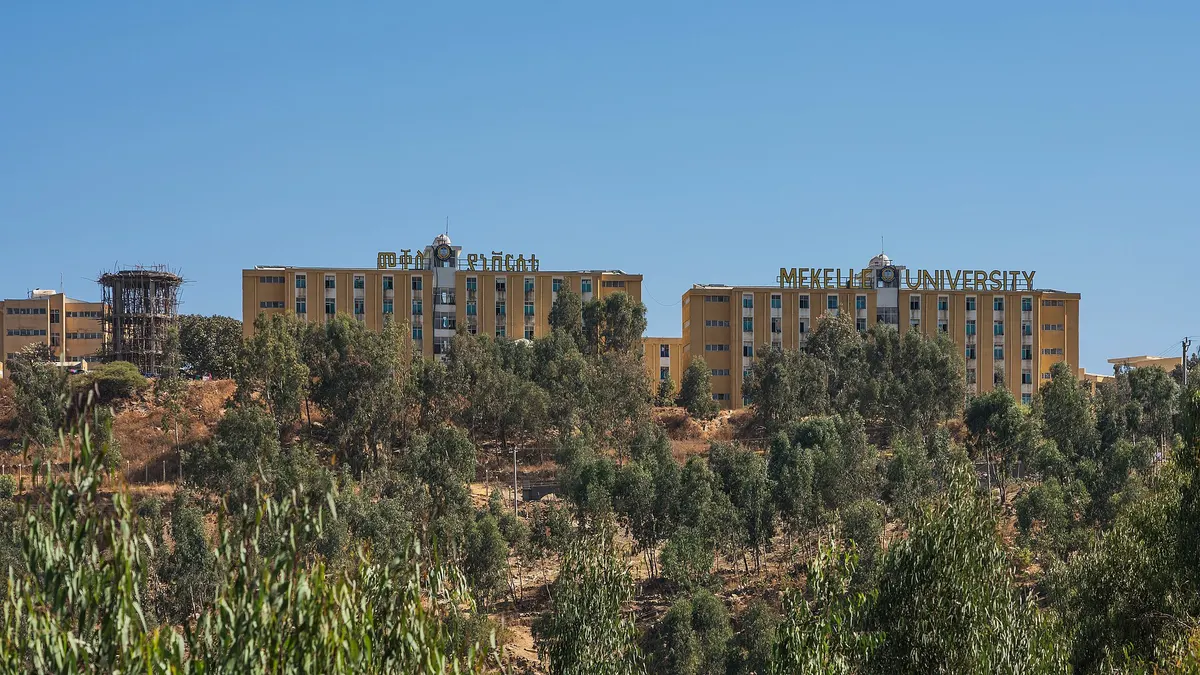 Photo: A.Savin, Free Art License 1.3, via Wikimedia Commons
Mekelle opened its medical school in 2003. Its 500-bed Ayder Comprehensive Specialized Hospital opened in 2008. The 2020–2022 war hit the school harder than any other on this list:
- A study of Ayder's records found inpatient visits fell by about 44% and outpatient visits by 52%.
- Staff went unpaid for most of 2021.
- Higher education in Tigray was suspended from June 2021.
Even so, Mekelle is the only Ethiopian university in the Times Higher Education 2027 world ranking (1201–1400). QS also places it second in Africa for papers per faculty member.
 5. Bahir Dar University, College of Medicine and Health Sciences
Profile, contacts and photos →
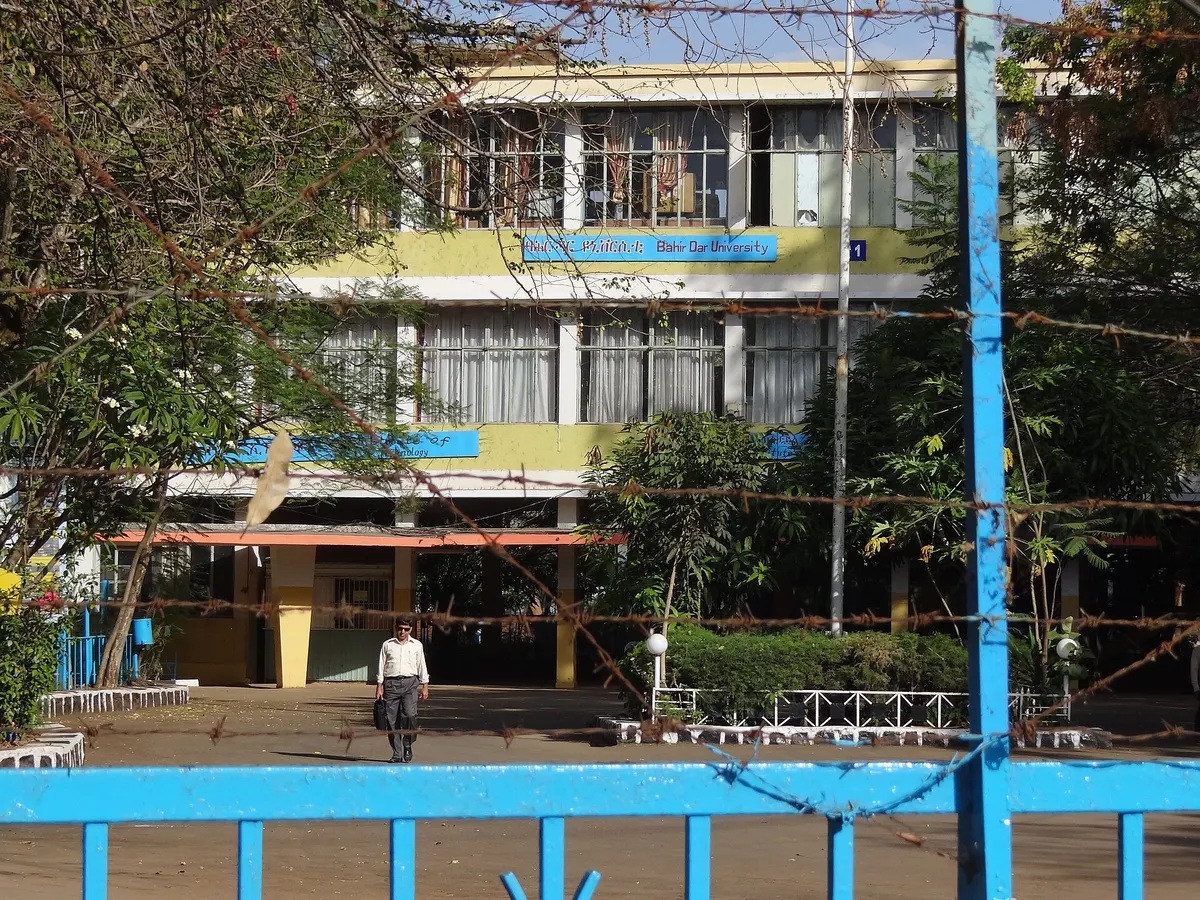 Photo: Adam Jones, CC BY-SA 2.0, via Wikimedia Commons
Bahir Dar opened its medical school in 2007 and became a college in 2009. Its teaching hospital, Tibebe Ghion Specialized Hospital, has more than 500 inpatient beds, including 20 ICU beds. It ranks 4th on uniRank and 5th on EduRank.
 6. Haramaya University, College of Health and Medical Sciences
Profile, contacts and photos →
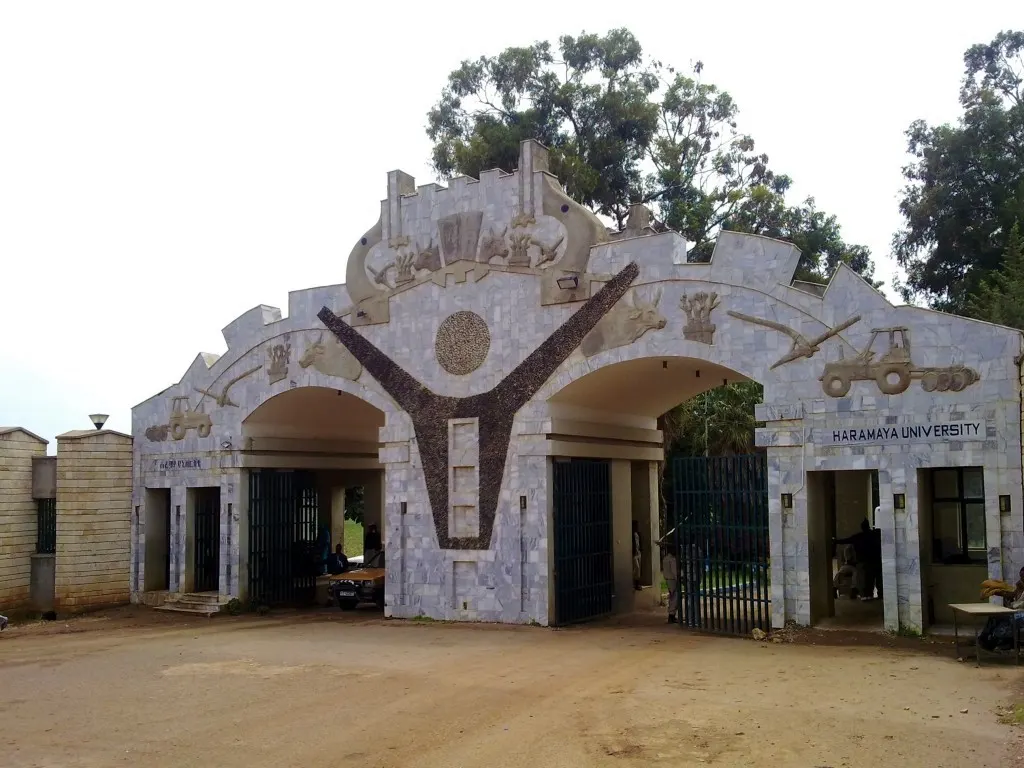 Photo: Huuniversity, CC BY-SA 4.0, via Wikimedia Commons
Medical training at Haramaya began in 2007. In 2010 the university took over Hiwot Fana Hospital in Harar, the referral hospital for eastern Ethiopia, for clinical teaching. Haramaya is 6th on EduRank and one of the eight research universities.
 7. Hawassa University, College of Medicine and Health Sciences
Profile, contacts and photos →
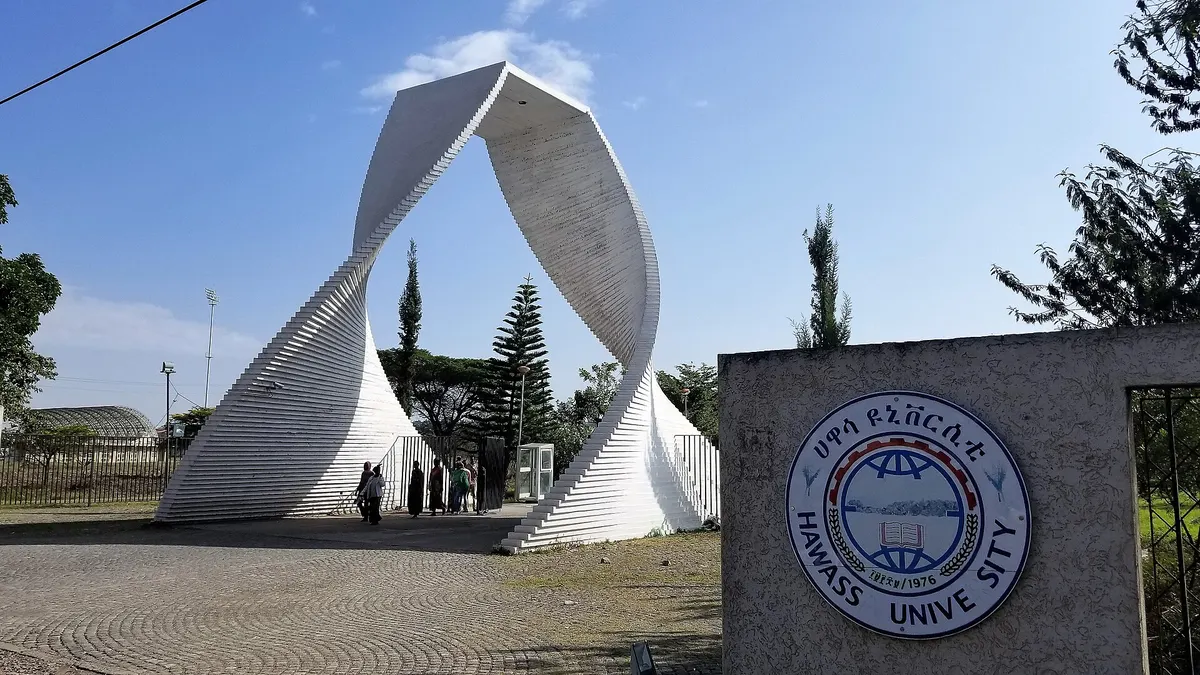 Photo: 7f7553, CC BY-SA 4.0, via Wikimedia Commons
Hawassa started in 1997 as a health faculty under Dilla College and established its School of Medicine in 2003. The college now runs 41 programmes, including 10 specialties and a gynaecologic oncology sub-specialty, with 2,644 students. It teaches at the 400-bed Hawassa University Comprehensive Specialized Hospital.
 Not on any list: St. Paul's Hospital Millennium Medical College
Profile, contacts and photos →
SPHMMC is the strongest argument against relying on the rankings alone.
- History: its hospital dates to the late 1960s, the medical school opened in 2007, and a Council of Ministers decree made it a college in 2010.
- Size: it runs a hospital of more than 700 beds.
- Curriculum: the Ministry of Health calls it Ethiopia's first integrated modular, hybrid problem-based curriculum, though a 2020 history of Ethiopian medical education says the problem-based approach "could not take off well".
- Specialist training: its OB/GYN department went from a first residency class of seven in 2012–13 to running subspecialty fellowships.
It is missing because the ranking sites rank universities, mostly by research output, and a standalone hospital college doesn't fit that model. Absence from a list is not a verdict.
Also worth knowing
- Arba Minch and Debre Markos are the strongest of the newer public schools on EduRank (9th and 8th). Arba Minch is also a designated research university.
- Adama Hospital Medical College is a public college under the Oromia Regional Health Bureau, inaugurated in 2012. Don't confuse it with the private Adama General Hospital & Medical College.
- Yekatit 12 Hospital Medical College in Addis Ababa has taught medicine since 2012. It is so far the only Addis MD programme on the Education and Training Authority's new online accreditation register (provisional, 2025–2028).
Private medical colleges
Private schools are a small part of the system: 10 of the 43 medical schools counted in 2022. None of them appears on any ranking, because they publish little research. The World Directory of Medical Schools lists these as private, with the year each began teaching medicine:
| College | City | Teaching medicine since |
|---|---|---|
| Hayat Medical College | Addis Ababa | 2005 |
| Bethel Medical College | Alemgena, on the edge of Addis Ababa | 2009 |
| Africa Medical College | Addis Ababa | 2011 |
| Myungsung Medical College | Addis Ababa | 2012 |
| Gamby Medical and Business College | Bahir Dar | 2012 |
| Adama General Hospital and Medical College | Adama | 2013 |
| Santé Medical College | Addis Ababa | 2014 |
| Rift Valley University, Faculty of Medicine | Adama | 2017 |
| Negele Arsi General Hospital and Medical College | Negele Arsi | 2017 |
| Ethiopian Catholic University of St. Thomas Aquinas (ECUSTA) | Addis Ababa | 2018 |
| Lorcan Medical College | Addis Ababa | 2021 |
The directory also lists Deutsche Hochschule für Medizin College in Bahir Dar (2019) without giving an ownership type. A directory listing confirms that a school exists and offers the MD; it is not an accreditation.
Two of these are the best documented:
- Hayat describes itself as the first private college in Ethiopia to produce medical doctors.
- Myungsung is attached to its own hospital, Myungsung Christian Medical Center (the "Korean Hospital", founded 2004).
The evidence on private schools as a group is a reason to ask questions, not a verdict on any one school:
- Teaching staff: the 2020 history of Ethiopian medical education warned that "many of the newly opened private medical schools run the teaching through part-time teachers."
- Licensing exam: private-school graduates scored significantly lower than public-school graduates on the licensing exam (more below).
- Exit exam: in the 2024 university exit exam, across all subjects, 21% of private-sector first-time candidates passed, against 69% at public universities.
Ask any private college for the Education and Training Authority's accreditation letter for the MD programme itself, its licensing-exam results, and how many of its teachers are full-time. We cover every Addis Ababa school, public and private, in our guide to medical schools in Addis Ababa.
What no ranking measures: the licensing exam
Since 2019, every new doctor in Ethiopia must pass the National Medical Licensing Examination run by the Ministry of Health. This is the most direct test of whether a school produces competent doctors. A 2026 study of the February 2024 round found:
- 1,259 graduates from 19 schools sat the exam.
- 98.5% passed, against a cut score of 58.4 out of 100; the mean score was 78.
- Graduates of public schools scored significantly higher than graduates of private schools.
The ministry does not publish results by school, so the figure that would answer "which school is best" isn't publicly available. The university exit exam, introduced across all fields in 2023, has the same gap: only 40.65% of more than 150,000 students passed the first round nationally, but no medicine-only results by institution have been released.
If you are choosing a school
- Ask each school for its licensing-exam pass rate for the last two or three graduating classes. A good school will have the number.
- Look hard at the teaching hospital. You spend the clinical years and internship there. Bed count, patient volume and the range of specialties on site shape the doctor you become.
- Check which residencies the school runs. Residencies are where specialists are trained. A school with many of them has senior clinicians teaching on its wards, and gives you a path to specialise without moving.
- Use EduRank for research strength and ignore uniRank for quality. One counts citations; the other counts web traffic.
- Know the entry routes. Most students enter straight from secondary school through the national entrance exam. Graduates in health or the natural sciences can also apply to graduate-entry programmes.
- Understand the cost. Public universities run cost-sharing under Regulation 91/2003: graduates repay part of the cost through a deduction from their salary. Private schools set their own fees, so ask for them in writing.
After graduation
More graduates have not meant enough jobs. Ethiopia's health labour market analysis assumes about 20% unemployment among new graduates, because funding for health posts hasn't kept pace with training. More new doctors are taking jobs in private clinics, where how well the clinic is run shapes their working day as much as their training does.
Sources
Rankings
- EduRank. Best universities for medicine in Ethiopia, updated 15 March 2026.
- uniRank. 2026 Ethiopian University Ranking.
- Times Higher Education. University profiles: Mekelle University (World University Rankings 2027), Jimma University (2025 and subject tables), and Addis Ababa University (2023).
- QS. World University Rankings: Sub-Saharan Africa 2026, release of 12 February 2026.
- Ethiopian News Agency. Ministry to reorganize institutions of higher learning, 2020; Fana. Ethiopia names eight universities centres of excellence in research, 2020.
Medical education in Ethiopia
-
World Directory of Medical Schools (WFME/FAIMER). Ethiopia search. Entries for Hayat, Bethel, Africa Medical College, Myungsung, Santé, ECUSTA, Lorcan and Rift Valley University.
-
Mekasha A. Brief history of medical education in Ethiopia. Ethiopian Medical Journal 58(1), 2020.
-
Tamrat W. Addressing poor pass rate in HE exit exam remains urgent. University World News, 18 April 2024.
-
FDRE Education and Training Authority. Accredited Institutions & Programs.
-
Hayat Medical College website.
-
Dejene D, et al. Assessment of clinical competence of graduating medical students and associated factors in Ethiopia. BMC Medical Education 24:17, 2024. Source for the growth from 5 to 43 schools.
-
Assefa T, Haile Mariam D, Mekonnen W, et al. Survival analysis to measure turnover of the medical education workforce in Ethiopia. Human Resources for Health, 2017. Source for founding years and teaching hospitals (Table 1).
-
Belay LM, Siebeck M, Sendekie TY, et al. Between principle and practice: a qualitative study of perceived relevance and impact of the Ethiopian national medical licensing examination. BMC Medical Education, 2026. Source for annual graduate numbers and the 2019 start of the licensing exam.
-
New Innovative Medical Education programme, Ethiopian Journal of Health Development. Source for the graduate-entry route.
-
World Bank. Physicians per 1,000 people, Ethiopia (WHO data).
Licensing and exit exams
- Belay LM, Siebeck M, Fischer MR, et al. Psychometric evaluation of the Ethiopian National Medical Licensing Examination. BMC Medical Education, 2026.
- Addis Insight. Ethiopia's university exit exams: only 40.65% of students pass, July 2023.
School profiles
- Addis Ababa: Black Lion Hospital; first neurology residency in East Africa; first family-medicine graduates.
- Gondar: University of Gondar institutional profile (IIE).
- Jimma: Jimma University; Jimma University Specialized Hospital profile.
- Mekelle: Ayder Hospital; war impact on Ayder's services, Conflict and Health 2023.
- Bahir Dar: College of Medicine and Health Sciences; Tibebe Ghion Specialized Hospital.
- Haramaya: Haramaya University takes over Hiwot Fana Hospital.
- Hawassa: College of Medicine and Health Sciences background and School of Medicine.
- SPHMMC: Ministry of Health college profile (moh.gov.et); St. Paul's Hospital Millennium Medical College.
- Myungsung: Myungsung Christian Medical Center.
- Cost-sharing: Higher Education Cost-Sharing Council of Ministers Regulation No. 91/2003.
See Bloom in your clinic
Fewer no-shows, less paper, cleaner billing — in one calm system your team will actually use. Book a short demo and we'll show you how.