
Bahir Dar University
A large public research university in Bahir Dar whose College of Medicine and Health Sciences (founded 2007) runs 53 programmes and teaches at Tibebe Ghion Specialized Hospital, a 500-plus-bed referral hospital opened in 2018.
Health programmes
- Doctor of Medicine (MD)
- BSc Anesthesia
- BSc Physiotherapy
- BSc Comprehensive Nursing (generic and post-basic)
- BSc Emergency and Critical Care Nursing
- BSc Pediatrics and Child Health Nursing
- BSc Midwifery
- BSc Pharmacy
- BSc Medical Laboratory Science
- 12 medical specialties (residencies), including general surgery, obstetrics and gynaecology, internal medicine, paediatrics, psychiatry and emergency medicine
- Fellowships: gynaecologic oncology, urology, pulmonology and critical care, urogynaecology, maternal-fetal medicine, head and neck surgery, paediatric ENT
- MSc Clinical Midwifery, MSc Adult Health Nursing, MSc Pediatrics and Child Health Nursing
- MSc Integrated Clinical and Community Mental Health
- MSc Pharmacology
- MSc Medical Microbiology, Medical Parasitology and Vector Control, Clinical Hematology and Immunohematology
- 12 MPH tracks (including WASH, public health genomics, field epidemiology, health informatics)
- PhD programmes in public health, epidemiology, biostatistics, environmental health, reproductive health, nutrition, health systems
Health and medical education
Bahir Dar University's College of Medicine and Health Sciences (CMHS) was established in October 2007, originally to train doctors. It now has five academic directorates: Medicine, Public Health, Pharmacy, Medical Laboratory, and Nursing and Midwifery. The college says it offers 53 programmes (9 undergraduate and 44 postgraduate, including specialty, master's, PhD and certificate programmes) and enrols more than 2,291 students, including 26 international students, mainly from South Sudan and Somaliland.
Medicine and residencies
The Directorate of Medical Education and Services runs the Doctor of Medicine (MD) and two other first degrees, the BSc in Anesthesia and the BSc in Physiotherapy. The anesthesia degree started in 2009 in the Ethiopian calendar (about 2016/17) and the anesthesiology residency in 2013 E.C. (about 2020/21). Physiotherapy moved to a competency-based, modular curriculum in 2022.
For doctors, the directorate lists 12 specialty programmes: general surgery, obstetrics and gynaecology, orthopaedics and trauma surgery, paediatrics and child health, internal medicine, clinical radiology, dermatology and venereology, ENT, ophthalmology, anaesthesiology and critical care, psychiatry, and emergency and critical care medicine. It also lists subspecialty fellowships in gynaecologic oncology, urology, pulmonology and critical care, urogynaecology and reconstructive pelvic surgery, maternal-fetal medicine, head and neck surgery, and paediatric ENT and facial plastic surgery. The college registrar also says it verifies medical graduates' credentials through the USMLE portal.
Nursing and midwifery
The Nursing and Midwifery directorate runs four first degrees: comprehensive nursing (generic and post-basic), emergency and critical care nursing, paediatrics and child health nursing, and midwifery. At master's level it offers clinical midwifery, adult health nursing, and paediatrics and child health nursing. It reports 460 students and 82 academic staff. The midwifery department lists the MSc in Clinical Midwifery, a training route for non-physician clinicians in emergency obstetric surgery. The emergency and critical care nursing department, started in about 2015/16, reports graduating about 122 nurses.
Pharmacy, laboratory and public health
- Pharmacy began as a department in 2017 and became a directorate in 2024. It runs the BSc in Pharmacy and an MSc in Pharmacology, with more than 200 undergraduates, more than 40 master's students and 30 staff.
- Medical laboratory science started in 2011 as a microbiology, parasitology and immunology department and added the BSc in 2016. It now offers MSc programmes in medical microbiology, medical parasitology and vector control, and clinical haematology and immunohaematology.
- Public health sits on the Felege Hiwot campus. It has six departments and lists 12 MPH tracks: reproductive health, environmental health, WASH, nutrition and dietetics, health system and project management, general public health, health promotion, epidemiology, biostatistics, field epidemiology, health informatics and public health genomics. The directorate's own summary says it runs 6 PhD programmes but lists seven: biostatistics, public health, epidemiology, environmental health, reproductive health, public health nutrition, and health systems and policy.
Teaching hospital
Clinical teaching is based at Tibebe Ghion Specialized Hospital, which opened in 2018. The college says it serves more than 10 million people and has more than 500 inpatient beds, including 20 ICU beds. It also lists 14 operating theatres, a 3 Tesla MRI, a 128-slice CT scanner and its own oxygen plant. The hospital calls itself one of Ethiopia's five national quality hubs and a centre of excellence for emergency and critical care. The college's research facilities include the Tana Research and Diagnostic Center and the Mecha Demographic Surveillance and Field Research Center.
Accreditation and rankings
On the Education and Training Authority's online register, Bahir Dar's anesthesia programme (Tibebe Ghion campus) is provisionally accredited (certificate ETA-000013, issued 18 February 2026, valid to 18 February 2029). It was the only Bahir Dar programme listed when we checked. The register is new and lists only 13 accreditations nationwide, so if a programme is missing, that doesn't mean it is unaccredited. We could not check the World Directory of Medical Schools: its site blocked automated access.
EduRank puts Bahir Dar 5th in Ethiopia for medicine, nursing and public health research, and 4th for pharmacy and for obstetrics and gynaecology. These rankings measure research publications, not teaching.
The institution
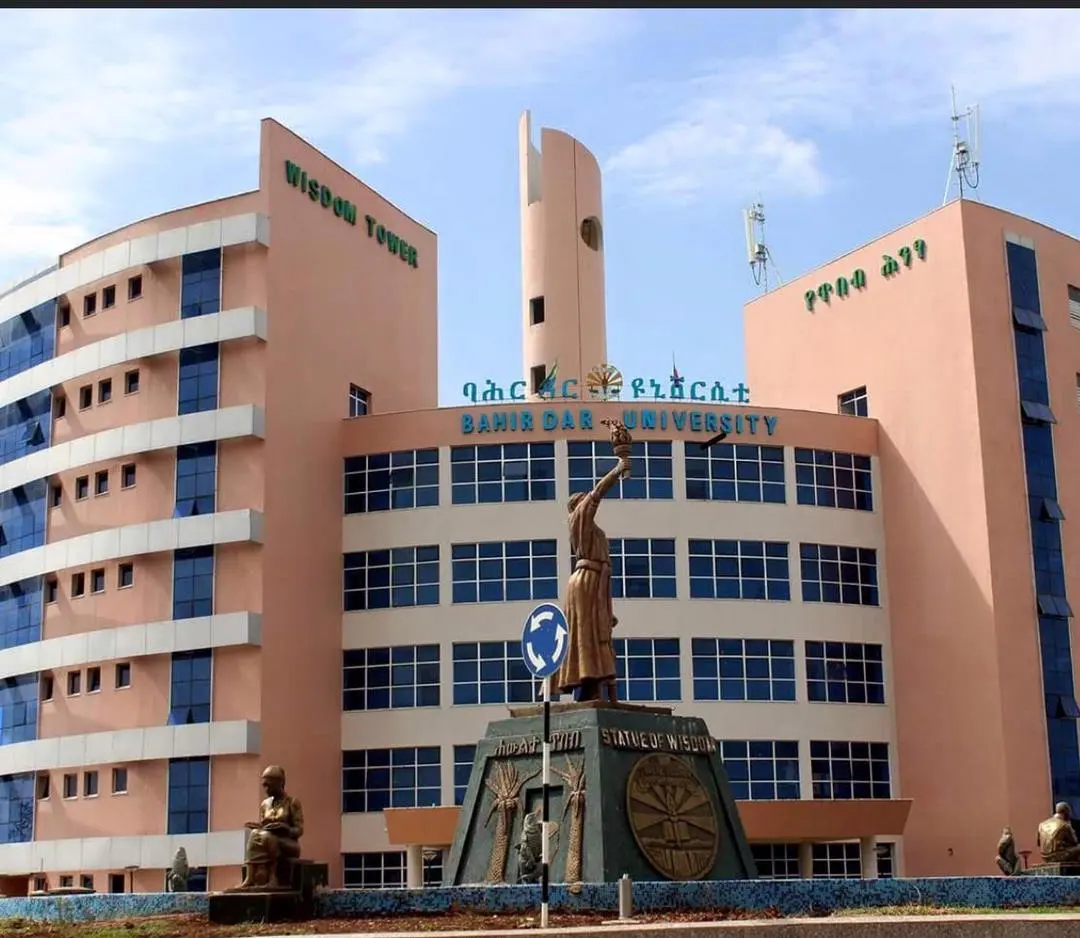
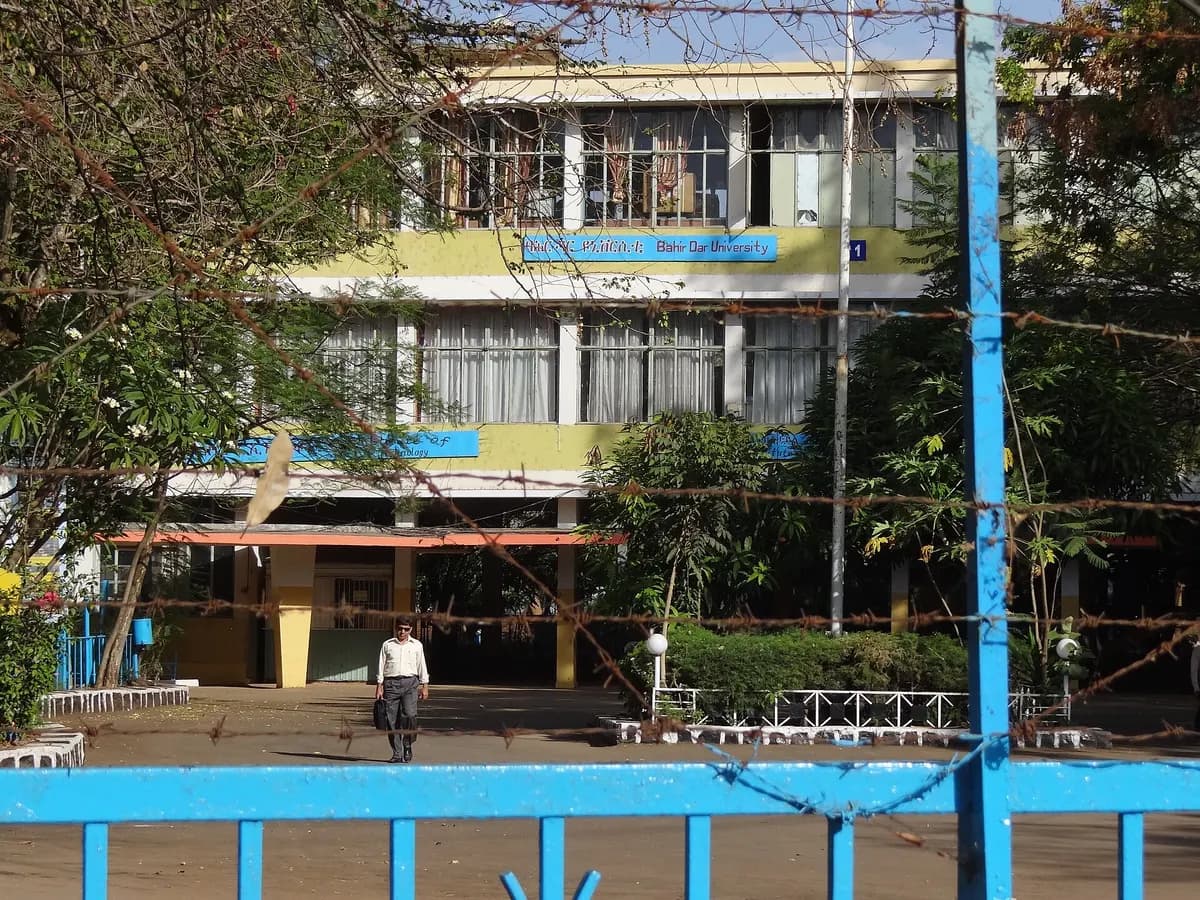
Bahir Dar University was formed by merging two older institutions: the Bahir Dar Polytechnic Institute, set up in 1963 with Soviet assistance, and the Bahir Dar Teachers' College, which started as the Academy of Pedagogy in 1972. According to Wikipedia, the merged university was inaugurated on 6 May 2000. Its homepage describes it as a Centre of Excellence for teacher education. It is ranked 3rd in Ethiopia overall on EduRank and 4th on uniRank. A university video describes eight campuses.
The health college works from two teaching campuses in Bahir Dar city. Tibebe Ghion hosts medicine, pharmacy, medical laboratory, and nursing and midwifery. Felege Hiwot hosts public health and an in-service training centre. A third site, the Tana Research and Diagnostic Center, handles diagnostics and research. The college publishes a map link on its campuses page and has a four-storey library.
Like other public universities, Bahir Dar admits regular undergraduates through national placement after the higher education entrance exam. Residency places come through the national residency matching process. The college registrar publishes a payment guideline for self-sponsored undergraduates, but we did not find published tuition figures.
Before you apply
- Check which campus your programme is on. Public health is at Felege Hiwot; most clinical programmes are at Tibebe Ghion.
- Ask for the ETA accreditation status of your exact programme. Only anesthesia appeared on the online register when we checked.
- For master's study, check the registrar's current postgraduate admission list. Tracks such as public health genomics or WASH may not take students every year.
- If you are self-sponsored, ask the CMHS registrar for the current payment guideline before you enrol.
- The college's main phone number is printed in a confusing way, so the CMHS email (cmhs@bdu.edu.et) may be the easiest first contact.
Rankings
These measure research output or web presence, not teaching. Tap a figure to open the ranking.
- EduRank Medicine (Ethiopia / Africa / world)5 / 59 / 1,553
- EduRank Nursing (Ethiopia / Africa / world)5 / 30 / 787
- EduRank Public Health (Ethiopia / Africa / world)5 / 28 / 695
- EduRank Obstetrics and Gynaecology (Ethiopia / world)4 / 970
- EduRank Pharmacy (Ethiopia / world)4 / 2,346
- EduRank overall (Ethiopia / Africa / world)3 / 96 / 3,391
- uniRank 2026 (Ethiopia)4
Compared in our guides
- The Top Pharmacy Schools in EthiopiaRate BDU there
- The Top Public Health Schools in EthiopiaRate BDU there
- Where to Study Midwifery in Ethiopia: The Schools, the Degrees and the Licensing ExamRate BDU there
- The Top Nursing Schools in Ethiopia, ComparedRate BDU there
- The Top Medical Schools in Ethiopia, Compared Across the RankingsRate BDU there
Sources
- Bahir Dar University home page (contacts, history)
- College of Medicine and Health Sciences home page (contacts, departments)
- CMHS background
- CMHS contact information
- CMHS campuses and maps
- CMHS Registrar and Alumni Management Directorate
- Tibebe Ghion Specialized Hospital: about the hospital
- Directorate of Medical Education and Services
- Nursing and Midwifery Education and Services Directorate
- Directorate of Pharmacy Education and Services
- Directorate of Public Health Education and Services
- Directorate of Medical Laboratory Science Education and Services
- Department of Anesthesia
- Department of Emergency and Critical Care Nursing
- Department of Midwifery
- FDRE Education and Training Authority: Accredited Institutions and Programs
- EduRank: Bahir Dar University
- uniRank Ethiopia 2026
- Wikipedia: Bahir Dar University (inauguration date)