
One record for the health center, and the HMIS return built from it
ANC, delivery, immunisation, chronic care, HIV and TB on one record per patient — and the monthly HMIS return, the disease returns and the weekly IDSR report built from the work your staff already recorded. For private, mission and NGO health centers, and the regional programmes digitising public ones.
The problems we hear from health centers
The monthly HMIS return, tallied by hand
The same visits are counted again at month-end from a dozen registers — late, and only as accurate as the tally sheet.
A register for every programme
One mother can appear in the ANC, delivery, EPI and family-planning registers, and one patient in NCD, ART and TB — each written separately, none agreeing.
Children who start the vaccine schedule and drop out
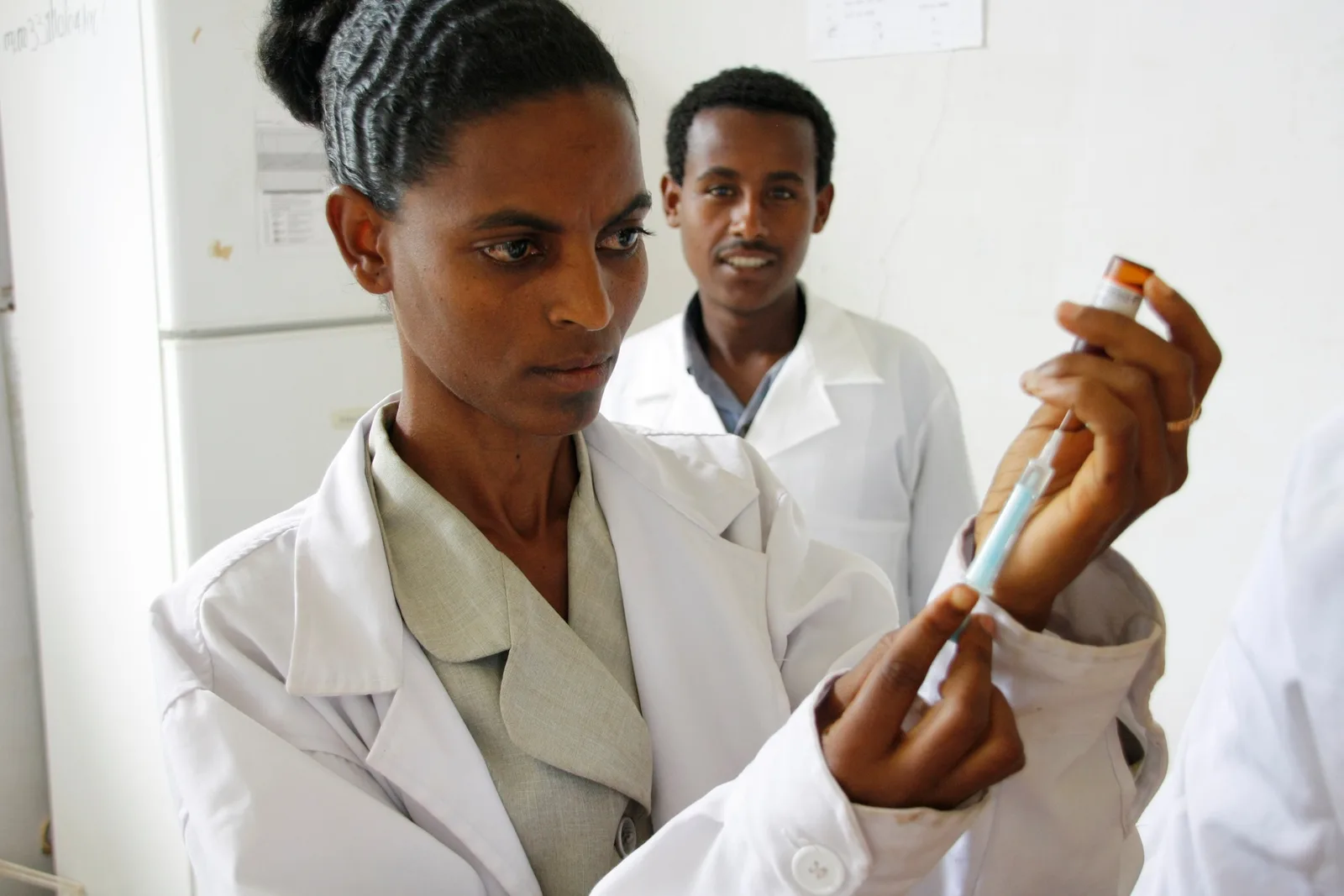
The dropout happens after the child is already on the books. A list of who is due and who is missed turns outreach day into follow-up, not search.
Stock-outs, expiry and logistics reports
Bin cards drift from the shelf, and the RRF is rebuilt each period from the same books.
Insurance claims cut at audit
Claims are reduced for arithmetic errors, duplicate orders and services outside the covered list — money the facility had already spent.
What you get on day one
The return built from the work
Monthly, quarterly and annual HMIS service returns on the official reporting calendar, OPD and IPD disease returns by sex and age band, and a DHIS2 export keyed by FMOH indicator code.
One patient, every register
Maternity and child health, NCD, HIV and ART, TB and leprosy, and SRH registers all hang off the same patient record.
Surveillance on time
Notifiable-disease alerts as cases are recorded, and the weekly IDSR return from the same data.
Logistics from the same ledger
Bin cards, Model 22 vouchers and the RRF and IFRR come from the ledger the dispensing window already writes to.
Which national registers are included
Each programme is an add-on module, switched on for the services the center runs. All of them record against the same patient, so a woman’s ANC visits, her delivery, her child’s vaccinations and her own NCD follow-up are one history.
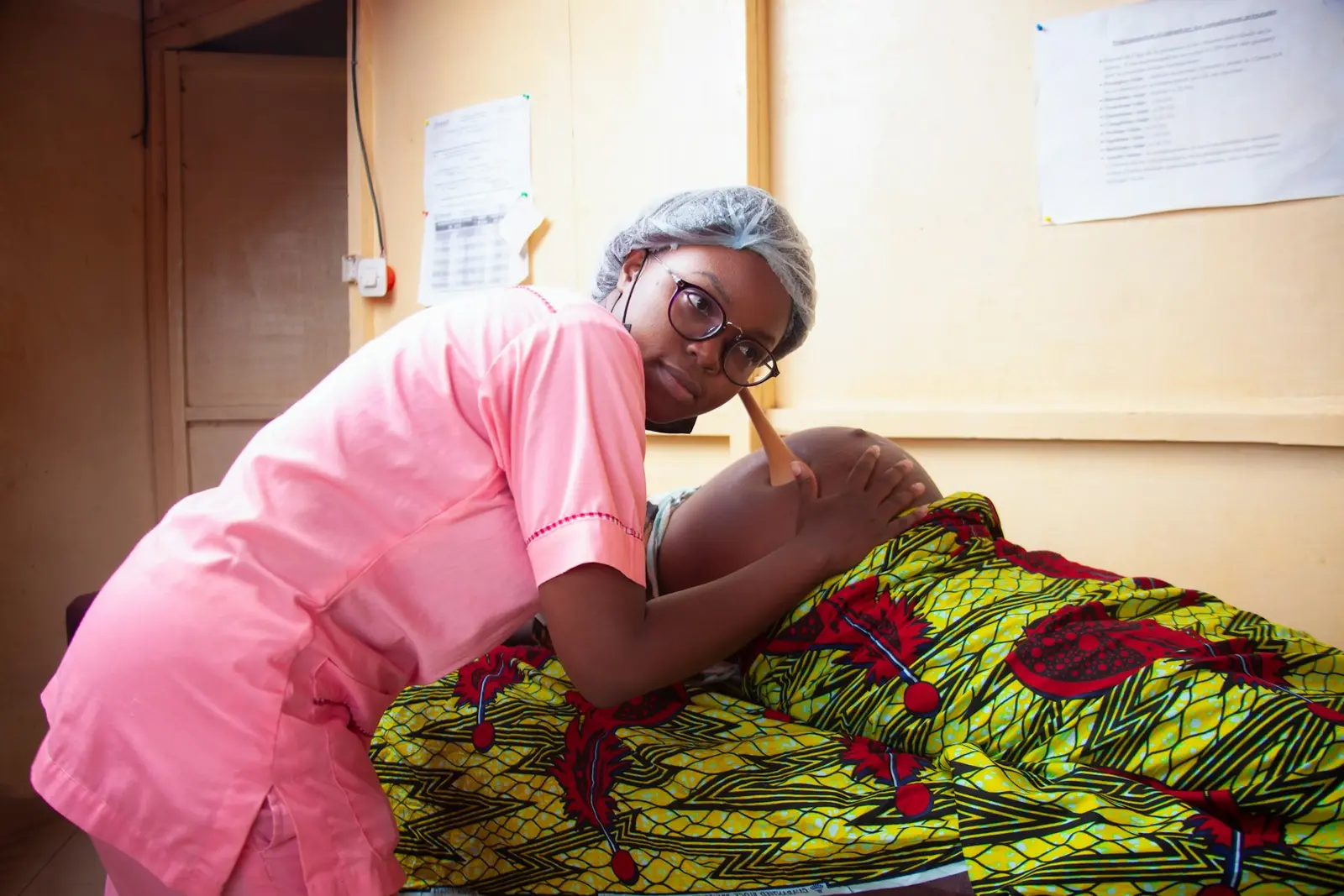
- Maternity & child health: ANC, labour with the partograph, newborn, PNC, IMNCI, growth monitoring, EPI
- Chronic care: hypertension, diabetes and other NCD registers with WHO cardiovascular risk
- HIV & ART: unique ART number, viral-load loop, defaulter tracing and the cohort report
- TB & leprosy: unit TB register, treatment and DOT cards, contact screening and the cohort report
- SRH: family planning, HIV testing, STI cases and outreach recorded without a visit
The modules health centers use
Every facility gets the core. Add-ons are switched on only where you need them.
HMIS & Surveillance
The national returns a facility is legally required to file, produced from the work already recorded.
- Monthly, quarterly and annual HMIS service return on the official reporting calendar
- OPD and IPD disease returns by sex and age band
- DHIS2 export keyed by FMOH indicator code
- Notifiable-disease alerts and the weekly IDSR return
Maternity & Child Health
From antenatal care to growth monitoring, with or without a labour ward.
- Labour and delivery with the partograph
- Newborn record and birth notification
- Postnatal care, IMNCI and growth monitoring
- Acute-malnutrition programmes
Chronic Care (NCD)
Registers for long-term conditions, with follow-up and control tracked per patient.
- Hypertension, diabetes, asthma/COPD, cardiovascular, kidney, epilepsy and cancer registers
- Follow-up visits with control status
- WHO cardiovascular risk assessment
- Opportunistic NCD screening and cervical cancer screen-and-treat
HIV Care & ART
The ART clinic on one record: enrolment, follow-up, viral load and the cohort report.
- Enrolment with the unique ART number, and ART initiation
- Follow-up form, regimen and status changes
- Viral-load loop with enhanced adherence counselling
- Differentiated service delivery models and defaulter tracing
TB & Leprosy
The unit TB register and treatment cards, with results flowing in from the lab when you have one.
- Presumptive TB register and unit TB register with the TB number
- TB and DR-TB treatment cards, and the DOT card
- Contact screening and TB preventive therapy
- Defaulter tracing and transfer in / out
Sexual & Reproductive Health
The registers a youth-friendly service keeps, including work done away from the building.
- Family planning and antenatal care visits
- HIV testing and counselling, and STI cases
- Counselling sessions and the youth client profile
- Community outreach recorded without a visit or a bill
Pharmacy
A dispensing window that knows the prescription, the stock and whether the visit is paid.
- Prescription queue by patient visit
- Dispensing with stock deduction, pricing, and the earliest-expiring batch picked first
- Partial supply, substitution, cancellation
- Over-the-counter sales at the drug window
Inventory & Stock
Purchasing, receiving and consumption in one ledger, so the screen matches the shelf.
- Products, categories, variants, suppliers
- Buy by the box, sell by the piece
- Purchase orders, goods receipts and supplier returns
- Batches and expiry, issued earliest-expiry first
Insurance & Claims
The payer and patient share split on the bill, and claims batched per payer.
- Payers, plans and patient coverage
- Line-by-line split between what the payer and the patient owe
- Claims batched per payer, with remittances posted as payments
Mobile App
The facility in a pocket for staff, and still readable when the connection drops.
- Patients, appointments, queue and triage on the phone
- Invoices, payments, and payment proof capture
- Medical records and lab results
- Field screens for postnatal and growth-monitoring visits
From the visit to the return
- 01
Register
One record per person, found by name, phone or card — or by Fayda national ID through the client registry.
- 02
See the patient
The visit is recorded against the programme it belongs to: ANC, EPI, NCD, ART or TB.
- 03
Follow up
Due and missed doses, overdue reviews and defaulters show up on lists as they happen.
- 04
Dispense
Medicines come off the same ledger that produces the bin card and the RRF.
- 05
Report
At period end, the HMIS return, disease returns and DHIS2 export are produced from the month’s records.
What health centers ask us
Does it follow the national reporting calendar?
Yes. HMIS service returns follow the official reporting calendar — the 21st of one month to the 20th of the next.
Can it feed DHIS2?
It produces a DHIS2 export keyed by FMOH indicator code, plus Word and Excel exports. It exports; submitting to DHIS2 stays with your HMIS focal person.
Does it do the weekly IDSR report?
Yes, along with notifiable-disease alerts.
Does it produce the RRF and IFRR?
Yes, from the Pharmacy module, with bin cards and Model 22 vouchers from Inventory.
We are a public health center. Can we use it?
Public health centers usually adopt systems through their regional health bureau and the Ministry. Bloom fits private, mission and NGO health centers directly, and public centers through regional or partner programmes. It does not replace DHIS2 or integrate with national EMRs such as SmartCare.
What happens when the power or internet goes down?
Recording work needs a connection. The staff mobile app keeps records readable offline, but new entries wait until the connection returns.
The research behind this page
Reporting on time and reporting correctly are different problems
Ethiopia runs one of the world's largest DHIS2 deployments — 30,000+ facilities, 95% reporting rates. The national maturity assessment scores data quality and infrastructure far lower. Submitting a report and submitting a correct one are not the same achievement.
One in five children unvaccinated: reading the dropout curve
20% of Ethiopian children aged 12–23 months have received no vaccinations at all. But the more actionable number is the gap between the first dose and the last — a tracking failure, not an access failure.
Ethiopia's first full DHS in nine years: what moved and what stalled
The EDHS 2024–25 Key Indicators Report is the first national demographic and health survey since 2016. Maternal and child survival improved sharply. Nutrition and routine immunisation did not.
The chronic caseload private clinics actually see
Self-reported non-communicable disease in Addis Ababa runs at 11.5% of adults. Among Ethiopians already diagnosed with type 2 diabetes, pooled hypertension prevalence is 55%. This is recurring, appointment-driven care — the kind paper registers handle worst.
Stock records in Ethiopian health facilities: what the studies measured
Ethiopian facilities do not mainly run out of medicines because nothing was ordered. They run out because the record of what is on the shelf disagrees with the shelf. The published measurements are consistent, and unflattering.
Also built for
View allMaternity & child health
ANC to the last vaccine on one record, with the partograph, EPI schedule and HMIS return built in.
NGO & PROGRAMME SITESNGO & programme sites
ART, TB and SRH registers, cohort reports and outreach on one record, with sensitive charts sealed.
HOSPITALSHospitals
Wards, theatre, ED, lab, imaging and the running bill on one record.
Bring last month’s HMIS return
We will show you which of its numbers would have come straight from the day’s records — and how long the month-end would have taken.